Oct 20, 2026
Private Label Packaging Sample Kit: A Cross-Product Launch Approval Guide
A practical guide to approving a coordinated private-label packaging sample kit for paper gift bags, gift boxes and wrapping paper before launch.
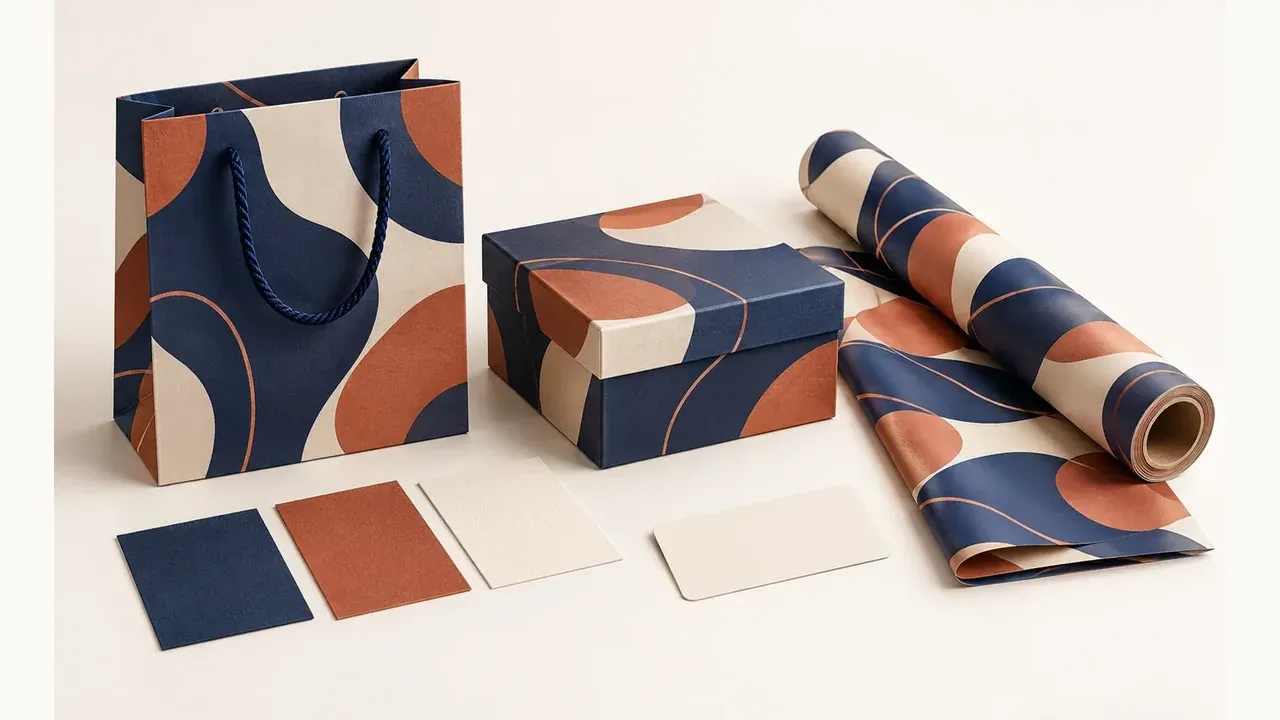
When a launch includes paper gift bags, gift paper boxes and wrapping paper, approving each item in isolation can leave visual and operational gaps. A coordinated sample kit helps a buyer compare the whole customer-facing set before MOQ, production timing and delivery are locked.
This guide explains what to include in a private-label packaging approval kit and how to turn the review into a clear supplier quotation. It is a decision framework, not a promise that every product can use exactly the same material or finish.
Build the kit around the customer journey
Start with the way the products will be used together. A retail customer may receive a box inside a bag, wrap an item at home or see all three products on one display. List the items, sizes, product contents and the point at which each component is visible. This makes it easier to identify which visual details must match and which are functional choices.
Include the intended market, launch date and whether the program will be seasonal, permanent or a short promotion. These constraints affect artwork approvals, material availability, cartons and the amount of flexibility available around MOQ.
Include a representative version of each packaging format
The sample kit should include a finished paper gift bag, a finished gift paper box and a wrapping-paper sheet or roll made as close as possible to the proposed specification. Include relevant options such as handles, inserts, lids, tissue or labels when they affect the buyer’s decision.
Ask the supplier to identify which parts of each sample are production-like and which are presentation-only. A mock-up can confirm an artwork direction, but it should not silently become the approval for board grade, handle construction, print method or surface finish.
Compare shared artwork across different substrates
The same colour file can look different on uncoated bag paper, wrapped rigid board and coated wrapping paper. Review the logo, background colour, repeat pattern and fine details across all three surfaces together. Note where a deliberate adjustment is needed to achieve a coordinated appearance.
Keep a single controlled artwork pack with the approved revision, colour references and placement drawings for each product. Do not assume a visual match from a screen preview alone; record the final observation against the actual sample materials.
Review function and presentation together
For paper gift bags, inspect the bag construction, handles, top fold and the way a filled bag presents. For gift paper boxes, assemble the box with its intended contents or representative filler and check lid, insert and corner appearance. For wrapping paper, fold and handle a sheet or roll as it would be used in the program.
Review the items side by side after these normal-use steps. Look for scuffing, unexpected print distortion, finish inconsistency, visible adhesive or a mismatch in the pattern scale. Record observations in plain language and request a revised sample where an approved visual or functional condition changes.
Make approval roles and boundaries explicit
Decide who approves artwork, physical construction, colour appearance, product fit and carton packing. A buyer may need internal marketing approval for a logo but operations approval for a box insert or a packing sequence. Name the decision owner and the version being approved so a late comment does not get lost between teams.
The supplier should confirm which sample elements will control production and which changes would require fresh artwork, material confirmation or a new sample. This is particularly useful when one SKU is updated while the rest of the set is intended to remain unchanged.
Convert the kit into a launch-ready quotation
Attach the approved sample record to the RFQ. Ask the supplier to quote each product’s material, print and finish; tools or setup where relevant; expected MOQ basis; sample steps; production sequence; carton packing; and delivery terms. A combined launch may still require different MOQ or lead-time logic for each item, so request that any dependency is stated rather than assumed.
Before production, obtain written confirmation of the final item list, artwork revision, approved sample reference and any agreed substitutions. Keep that record for repeat orders, where it becomes the fastest way to distinguish a genuine reorder from a changed program.
Quotation checklist
• [ ] Complete item list with bag, box and wrapping-paper sizes, intended contents and customer journey
• [ ] Finished or production-like sample for every product plus identification of any mock-up-only elements
• [ ] Controlled artwork revision, logo placement and pattern-repeat drawings for each format
• [ ] Material, board, paper, handle, insert, print and surface-finish descriptions
• [ ] Side-by-side appearance review for colour, scale, sheen, registration and normal-use marks
• [ ] Functional review for bag carrying, box assembly/product fit and wrapping/folding use
• [ ] Named approval owners, master-sample reference and change-control boundary
• [ ] Item-level MOQ, sample timing, production sequence, carton packing, delivery terms and launch date