Oct 13, 2026
Private Label Gift Packaging MOQ and Delivery Plan for Bags, Boxes and Wrapping Paper
A sourcing guide for planning MOQ, shared artwork, sampling and delivery when private label packaging includes paper gift bags, gift boxes and wrapping paper.
Private Label Gift Packaging MOQ and Delivery Plan for Bags, Boxes and Wrapping Paper
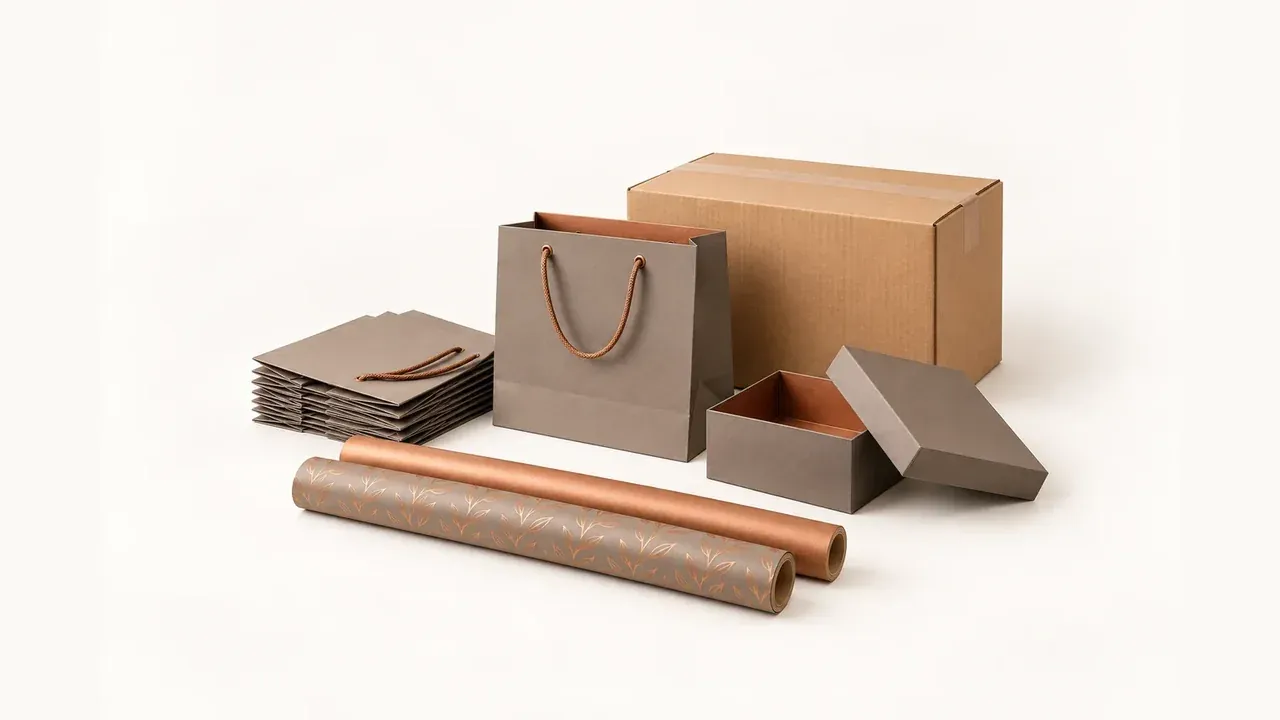
Private label packaging projects often look simple at the concept stage. A buyer may want one seasonal design system across paper gift bags, gift paper boxes and gift wrapping paper, then ask one supplier to quote everything together. In practice, the difficult part is not only design consistency. It is MOQ alignment, sampling sequence and delivery planning across three different product types.
When buyers manage these points early, a coordinated packaging program becomes much easier to control. When they do not, the project often slows down because one product line is ready while another still has artwork, material or shipping issues.
Why coordinated private label packaging needs one sourcing timeline
Paper gift bags, gift boxes and wrapping paper are related, but they do not move through production in exactly the same way. Bags may depend on handle material and reinforcement details. Boxes may depend on structure, insert and surface finish approval. Wrapping paper may depend on print repeat, roll or sheet format and retail packing method.
That means buyers should plan one overall packaging calendar instead of treating each item as an isolated order. The quotation stage should already include sample timing, production timing and delivery timing for the full set.
How MOQ usually differs across the three product groups
MOQ is often the first point that causes coordination problems. A supplier may support a lower MOQ for one bag size, but require a higher starting quantity for a rigid box or a custom wrapping paper print run.
In practical terms:
- paper gift bags are often influenced by size, handle type and printing setup
- gift paper boxes are often influenced by box structure, board thickness, wrapped paper and finishing process
- gift wrapping paper is often influenced by roll or sheet format, paper GSM, print design count and retail packing method
Buyers should ask whether quantities can be split across designs while keeping one shared material or structure. This is often a better way to balance MOQ than asking every item to meet the same minimum number.
When artwork should be unified and when it should be split
Private label packaging usually benefits from one common visual system, but not every artwork element needs to be identical. Some projects work best when the logo, key color and brand pattern stay consistent while dimensions and technical layout change by product type.
Buyers should confirm:
- which logo files are shared across bags, boxes and wrapping paper
- whether print colors will be matched under one reference standard
- which items need full retail artwork and which need simpler transit or inner packing graphics
- whether barcode, caution mark or label content changes by SKU
This avoids late-stage redesign when the box layout or wrapping paper repeat size does not match the original concept file.
How to stage samples and approvals efficiently
A full private label set does not need to wait for every detail to be finished before sampling starts. In many cases, buyers can approve technical specifications first, then move artwork approval in parallel.
A practical sequence is:
- confirm size, structure, paper type and finish direction for each product
- approve one color and logo standard for the full packaging set
- review bag, box and wrapping paper samples against the same branding goal
- issue one written approval note with any product-specific exceptions
This method helps reduce rework and makes the final production instruction clearer for the supplier.
How to reduce delivery risk before the launch date
Delivery risk is usually lower when buyers separate production timing from shipping timing. The supplier should confirm when each product will finish, when the combined set will be cargo ready and whether split shipment is possible if one item finishes earlier.
For seasonal launches, buyers should also ask:
- whether stock paper can be used for part of the order
- whether bag or box samples can be approved first to protect the schedule
- whether retail packing can be simplified if lead time becomes tight
- whether partial shipment by batch is acceptable
These decisions are easier to make before bulk production starts than after one product line is already delayed.
What to send for a faster quotation
To quote a coordinated private label packaging project clearly, suppliers normally need:
- bag sizes and handle requirements
- box style, box size and insert request
- wrapping paper format: roll, sheet or folded pack
- paper materials and finish expectations
- logo files and artwork status
- estimated quantity per item and per design
- target market, delivery country and deadline
With this information, the supplier can explain where MOQ is flexible, where sampling is required and which product is likely to drive the delivery schedule.
Quotation Checklist
- Product mix: bags, boxes, wrapping paper
- Size list for each item
- Paper type, board thickness or GSM by product
- Handle, insert and retail packing requirements
- Logo files, artwork status and color reference
- Surface finish requirement for each item
- Quantity per design and per SKU
- Sample sequence and approval deadline
- Delivery country, launch date and split-shipment preference