
Oct 14, 2026
Paper Gift Bags: Fold-Line Cracking and Lamination Sample Guide
Check paper gift bag fold-line cracking, lamination and edge whitening with a practical sample, packing and bulk-approval guide for retail buyers.
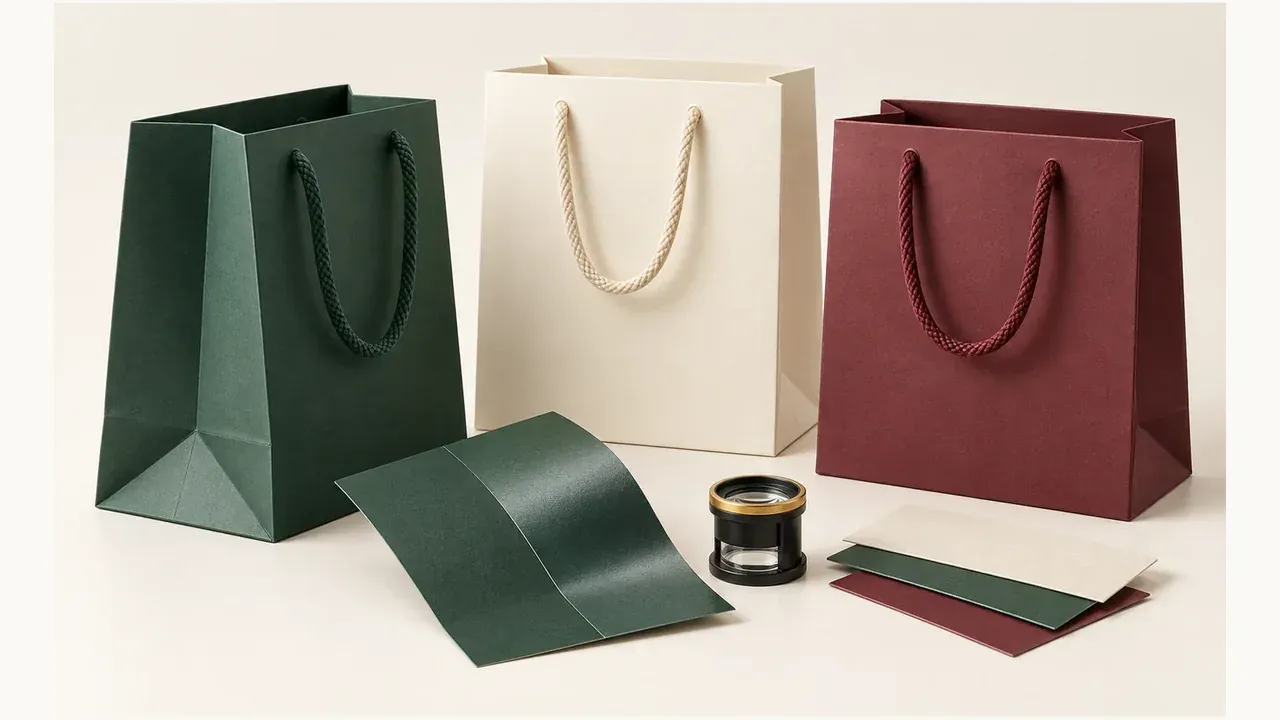
A paper gift bag can look flawless while it is flat and still show pale fold lines, split ink or lifting film after it is opened. Dark solid colours, thick paper, coated surfaces and tight gussets make these defects easier to see. Buyers can reduce the risk by approving the folded bag, not only the artwork PDF or a loose printed sheet.
Separate the evidence before approval
A digital proof confirms copy, orientation and artwork position, but it cannot prove how the printed surface behaves at a crease. A flat printed sheet can show colour and coating, yet it does not reproduce every side-gusset and bottom fold. Use a fully converted production-like sample when fold appearance is commercially important, and record which material, print, coating and construction it represents.
Mark the high-risk fold zones on the dieline
Review the front and back panels, side gussets, top turn and bottom construction together. Flag dark coverage, fine reverse text, foil, spot coating or a logo that crosses a crease. Ask the supplier to identify the glue seam and the direction in which each score will be folded. Moving a critical graphic away from a severe fold may be more reliable than trying to hide a predictable stress mark after production.
Inspect the surface after realistic opening
Open and close the sample several times using the way retail staff will handle it. Examine the outer and inner sides of each crease under consistent light. Record whitening, fractured ink, film lifting, wrinkles or a change in gloss. Compare the result with an identified reference sample rather than a phone photo. If the bag will arrive flat-packed, repeat the check after it has spent time under the proposed carton compression.
Check the whole material and finishing combination
Do not approve “matte lamination” or “coated paper” as isolated labels. The result depends on the paper surface, print coverage, coating or film, score and folding sequence. Request the exact production proposal and ask what will change if the sample uses a substitute stock or temporary finish. When recyclability or destination-market requirements matter, request documented confirmation for the proposed complete construction instead of assuming that every paper-looking bag follows the same disposal route.
Connect appearance checks with bag performance
A fold can look acceptable when empty but open further when the bag carries a boxed product. Test the sample with the intended contents, tissue and expected load. Check whether the gussets open evenly, the base sits flat and the surface changes around handle holes, reinforcement cards or bottom folds. This does not replace an agreed load test; it ensures the visual approval represents the bag in use.
Approve packing as part of the surface standard
Review the proposed bags-per-bundle, inner protection, carton dimensions and stacking direction. Tight packing can press rope handles or knots into a laminated panel, while loose packing can allow surfaces to rub in transit. Inspect samples taken from the top, centre and bottom of a representative pack-out when possible. Define whether protective paper or bags are included in the quotation.
Create a usable production release record
Give the approved sample a unique revision and connect it to the artwork, dieline, paper, finish and quotation. Photograph the named fold zones before and after the agreed opening or packing check. List any temporary material and unresolved correction. “Looks good” is not a reproducible instruction; an approval record should make clear which evidence releases bulk production and which points still require a revised sample.
Quotation and sample checklist
• [ ] Finished width, gusset and height, plus the intended contents and loaded weight.
• [ ] Paper reference, GSM, colour and surface description.
• [ ] Artwork version and high-coverage areas crossing folds or seams.
• [ ] Print method, named coating or lamination, and any foil or spot finish.
• [ ] Dieline version with crease, glue, handle and reinforcement positions.
• [ ] Converted sample type and fold-opening review method.
• [ ] Acceptable reference, viewing light and defects to record.
• [ ] Bundle protection, carton quantity, stacking direction and delivery destination.
• [ ] MOQ by size/design, sample timing and bulk schedule after approval.
Next step for buyers
Send the supplier the intended contents, current artwork and finished bag specification together. Request a converted production-like sample in the proposed finish and pack-out, then approve the named fold zones and retained sample reference before releasing bulk production.