
Oct 27, 2026
Paper Gift Bag Foil Logo Colour Consistency: A Master-Sample Guide
Control foil logo colour, placement, substrate contrast and master-sample approval across custom paper gift bags for dependable private-label reorders.
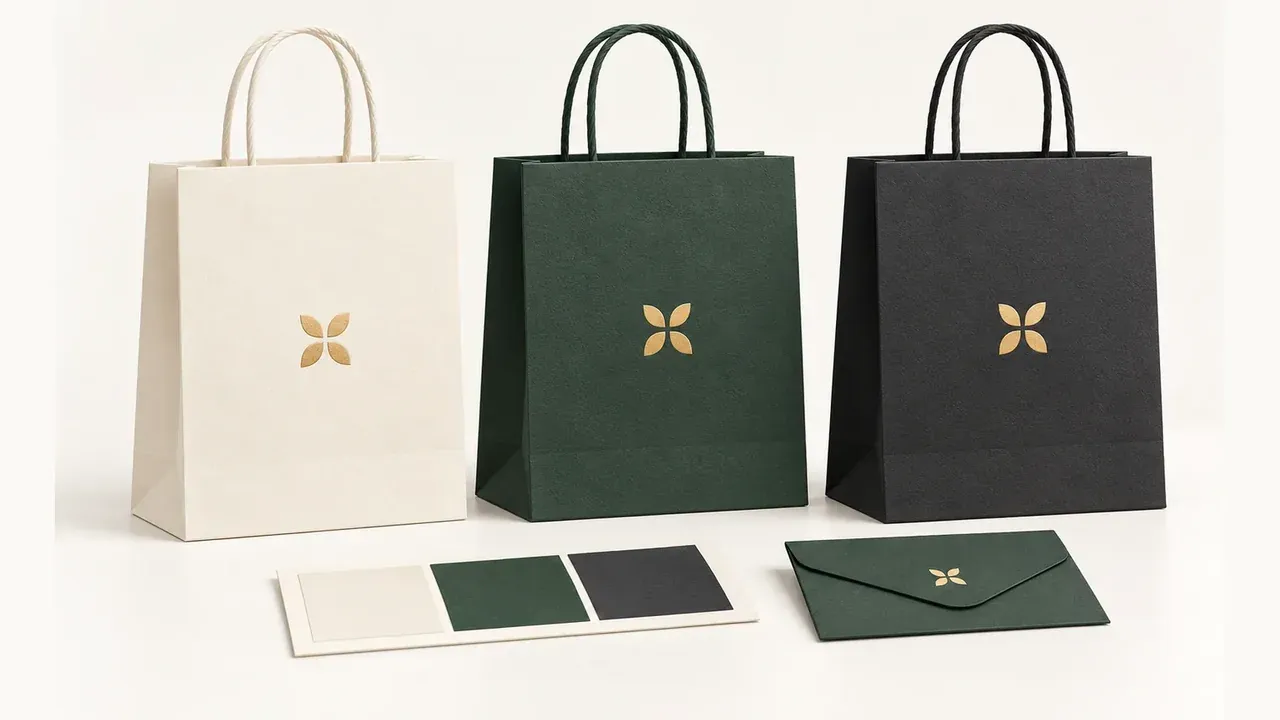
Foil logo printing can make a paper gift bag feel distinctive, but buyers often discover colour variation only when bag panels, order batches or retail locations are compared side by side. Foil is affected by the selected grade, the paper beneath it, pressure, heat and the viewing light. A useful procurement process turns “gold logo” into a controlled specification with a physical master sample.
Start with the appearance you need to repeat
Describe the desired foil by its visual effect: bright or muted, warm or cool, mirror-like or satin. Name the bag paper colour, coating and texture that the foil will sit on. The same foil can appear different on cream, coloured or textured stock, so approve it on the final bag substrate rather than on a separate swatch alone. If the identity system includes boxes or wrapping paper, decide whether the target is an exact visual match or a coordinated family of finishes.
Supply artwork with clear foil layers and placement rules
Provide vector artwork with foil elements on a dedicated layer and indicate the finished logo size, orientation and panel location. Include clearance from folds, handle patches, side gussets and glued seams. Fine reverse details and tightly spaced type can fill in or break up during foil stamping, especially on textured paper. Ask the factory to flag any artwork features that need adjustment before the die or plate is made.
Specify the paper and surface beneath the logo
Paper absorbency, coating, lamination and texture influence foil adhesion and reflectivity. A smooth coated bag may produce a crisp, high-shine mark, while an uncoated or embossed surface can create a softer appearance. State whether the logo is to be applied before or after a protective finish and whether the bag will be handled frequently. The supplier should recommend a compatible foil and process, then confirm it on the production-intent sample.
Use a signed master sample as the visual reference
Approve a physical bag that includes the final paper, print, foil, handle and construction. Mark it as the master sample and photograph the logo under neutral light with the bag colour visible. Capture the front panel, a close detail and any other foil locations. The master sample is the reference for subsequent inspections; a digital mock-up cannot reliably show foil tone, coverage or registration.
Check consistency across positions and production batches
During the sample review, compare logos on more than one panel and, where possible, more than one bag. Look for incomplete transfer, pinholes, edge burrs, excessive pressure marks, skewed placement and visible colour shift. For repeat orders, send the retained master-sample record with the RFQ and ask the supplier to confirm material and foil availability before production. If a component changes, request a new comparison sample rather than assuming the previous approval transfers unchanged.
Build inspection and change control into the purchase order
Write the acceptable logo position, visual standard and inspection method into the order documentation. Include how changes to paper mill, foil supplier, coating or production site will be communicated. This matters for private-label programmes where the bag must look consistent beside older stock. Clear change control is more useful than vague instructions such as “match last order.”
Quotation checklist
• Finished bag dimensions, paper type, GSM, coating or lamination, colour and texture.
• Vector logo artwork, foil-only layer, finished size, panel position and clearance from folds and handles.
• Foil appearance target and supplier-confirmed compatibility with the specified paper surface.
• Production-intent master sample with final handles, print and foil for signed approval.
• Inspection photos and acceptance criteria for coverage, registration, pressure marks and visible colour consistency.
• MOQ, sample timing, bulk timing, repeat-order material availability, carton packing and delivery destination.
The practical approval rule
Approve the foil logo only from a complete production-intent bag and retain that approved bag as the master sample. On a repeat order, require confirmation of every material that affects appearance before the factory begins bulk work.