
Oct 13, 2026
Paper Gift Bag Foil Logos: An Artwork Checklist for Buyers
Prepare foil logo artwork for paper gift bags: check line detail, placement, paper and finish compatibility, sample approval, MOQ and delivery before ordering.
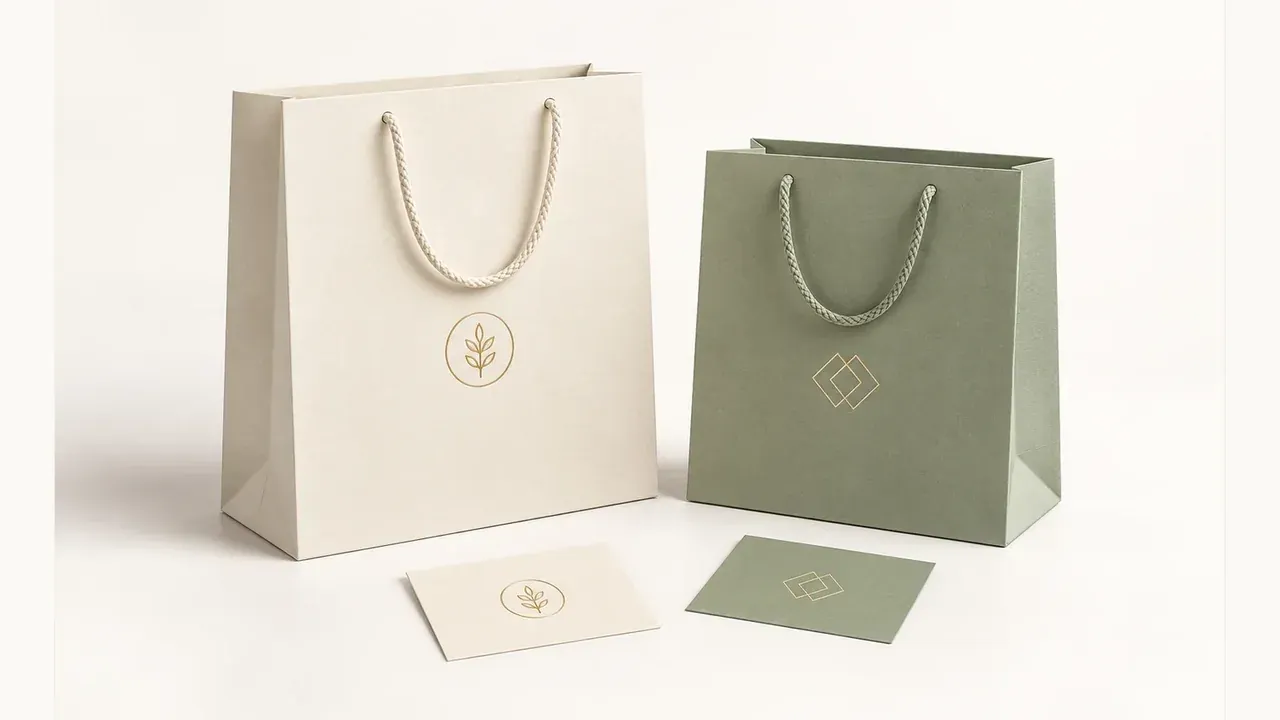
A foil logo can look clear on a screen yet lose its character when produced on a paper gift bag. Small spaces inside letters, a textured paper surface or placement close to a fold can all require a different production decision. For buyers, the useful starting point is an artwork review tied to the actual bag specification, followed by a physical sample.
Use the checklist below before approving tooling or ordering private label packaging. Its purpose is to turn a visual brief into questions that a supplier can answer and quote.
Identify the metallic process before preparing artwork
“Gold logo printing” is not a complete process specification. Metallic ink, hot foil stamping and digital metallic decoration should be identified separately in a quotation. KURZ, a finishing technology supplier, lists hot, cold and digital metallic decoration as distinct options for print and packaging. [KURZ print and packaging overview](https://www.kurzusa.com/graphics/).
Ask the bag supplier which process it proposes, whether it is available for the selected paper and order quantity, and what sample will represent production. Keep the agreed process in the purchase specification; do not approve a change solely because two photographs look similar.
Supply a separate foil layer at final size
Send the logo as editable vector artwork or a production-ready vector PDF in the supplier's accepted format. Provide a composite view showing the finished design and a clearly identified layer showing only the area intended for foil. Confirm font handling, artwork scale and the file revision before approval.
Ask the supplier to review the smallest positive line, the narrowest unprinted gap and the smallest lettering. Request its achievable limits for your chosen process and material instead of inserting a generic minimum line width from another project. If a detail needs simplification, approve a marked comparison at actual print size.
For example, a narrow gap inside a small emblem may be visually important even though it is easy to miss in a large screen preview. Flag that detail in the artwork review and ask to see it on the physical sample.
Check placement on an assembled paper gift bag
Approve the logo on the supplier's final dieline with the front panel, back panel, side gussets, top turn-over, handle holes and glue areas identified. Specify placement from agreed reference edges so that the buyer and factory measure the same thing.
Then open an assembled sample. Confirm that the emblem is centered as intended when the bag stands upright, that handles do not obscure it during normal use, and that folding does not put an unwanted crease through the design. Ask for the supplier's proposed placement tolerance and record your acceptance before production.
If several bag sizes share one brand mark, decide whether the logo keeps one physical size or scales with the panel. These choices can produce different tooling requirements and different visual results.
Review the complete paper and surface finish combination
Record the paper grade, color, grammage and proposed coating or lamination alongside the foil reference. Request a sample using the intended combination and process sequence. A foil swatch helps select appearance; it does not by itself approve the finished bag.
Inspect coverage, edges, small gaps and the visual relationship between foil and background under agreed lighting. Handle and fold the sample as store staff would. Describe unacceptable defects with photographs or retained samples rather than phrases such as “perfect foil.” Agree any adhesion or rubbing assessment with the supplier, including the method and pass criteria, before using it to accept goods.
Separate tooling, MOQ and delivery assumptions
Ask the quote to distinguish bag unit cost, foil tooling, sampling, additional decorated sides, packing and freight. Confirm whether changing logo size, foil color or bag artwork creates a separate setup or minimum order quantity. Do not assume the total across all designs qualifies every design for the same MOQ.
Request dates for artwork review, sample dispatch, sample approval, production completion and delivery. If a sample fails, confirm whether revised tooling or another sample changes the schedule. An ex-factory date and arrival at your warehouse are different milestones.
For a coordinated collection of gift paper boxes and gift wrapping paper, share the same brand reference but request separate process confirmation for each product. Approval on one paper surface should not automatically release the others.
Quotation checklist
• Paper gift bag dimensions and quantity per size and artwork.
• Paper grade, color, grammage, handles and surface finish.
• Foil process, foil reference and decorated sides.
• Final-size vector artwork, separated foil layer and revision number.
• Smallest details requiring a supplier feasibility review.
• Placement references, proposed tolerance and assembled sample requirement.
• Physical appearance and handling acceptance criteria.
• Itemized tooling, sampling, unit price, packing and freight.
• MOQ per design, repeat-order tooling terms and substitution approval process.
• Destination, required arrival date and approval-dependent delivery milestones.
Send the checklist with your artwork and a photograph of the intended bag style. Ask the supplier to mark unresolved details before issuing its final quotation. This makes competing proposals easier to compare and gives the sampling stage a clear approval target.