
Oct 23, 2026
Paper Gift Bag Flat Storage and Opening Checks for Retail Buyers
Specify flat packing, storage protection and opening checks for paper gift bags before approving materials, logo printing, MOQ and store delivery.
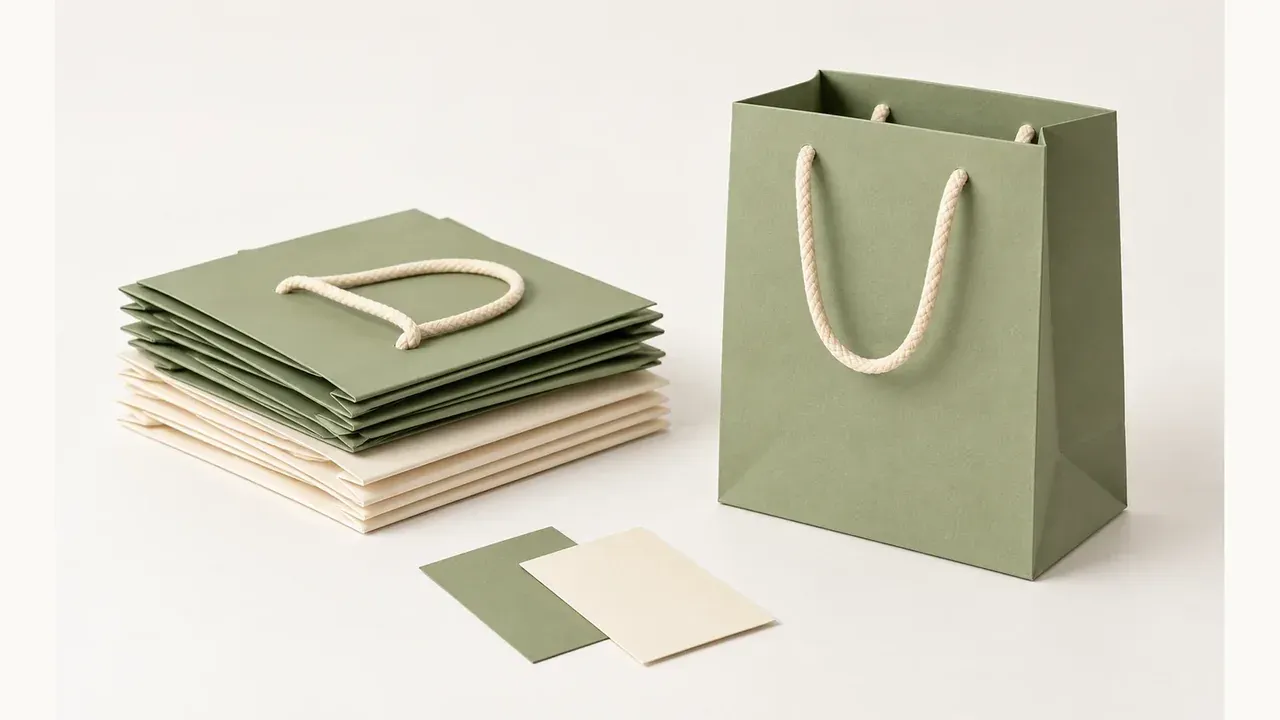
A paper gift bag should be approved in the condition in which store staff will receive and open it. An attractive upright sample does not establish how a bulk order will behave after flat packing, warehouse storage and repeated handling. Ask for a packed sample bundle, then open and fill representative bags using the intended retail routine before releasing production.
This guide focuses on storage and opening readiness. Handle strength, usable capacity and print approval still require their own checks; a bag that opens smoothly has not automatically passed those requirements.
Specify the flat-packed delivery condition
Define whether bags arrive flattened, how their handles are positioned and whether any base boards are fixed or supplied separately. A loose base board creates an extra store task and a component that must be counted. Request photographs of the actual proposed bundle, not only the finished upright bag.
Record bags per bundle, bundles per carton, size and design identification, and the arrangement of handles against printed faces. Ask whether interleaving or other protection is proposed for vulnerable surfaces. Make those details part of the packing specification so later quotations can be compared on the same basis.
For a multi-store program, choose bundle quantities that suit allocation and replenishment. Breaking a large bundle into many smaller store packs adds handling that a unit price alone will not reveal.
Match material and surface finish to storage exposure
List the proposed paper grade, grammage, finish and reinforcement construction. Grammage alone cannot describe how the assembled bag will fold, reopen or retain its appearance. Ask for a production-like sample using the intended stock, adhesive and finish.
Paper-based materials respond to their surroundings. Share the likely warehouse conditions, expected storage interval and whether cartons will move between different environments. Ask the supplier for finished-bag storage guidance and protective packing appropriate to that route. Avoid adopting a universal humidity limit or storage life without confirmation for the construction being ordered.
Keep cartons protected from water and crushing and follow the supplier's agreed handling instructions. If condensation, visible moisture damage or unusual distortion appears on receipt, document it and obtain a disposition before mixing affected bags into accepted stock.
Check logo printing after contact inside the bundle
The printed face may spend much of its journey pressed against another bag, a handle or protective material. Examine the outer, middle and bottom positions in the proposed sample bundle for visible impressions, rubbing, transfer or sticking between surfaces.
Compare the opened bag with the approved appearance sample under consistent lighting. Pay attention to dark solid print areas, foil details, folds near the logo and high points where handles rest. Record the storage and handling conditions used for the check rather than describing an unexplained result as a formal test certification.
If protection changes, repeat the relevant review with the revised bundle. A finish approved on a loose printed sheet does not establish the appearance of a compressed finished-bag bundle.
Run an opening and filling trial with store staff
Take bags from several positions in the sample bundle. Open each bag as staff normally would, settle the base, position any loose board and insert the intended merchandise with its tissue or protective wrap. Check that the gussets unfold without tearing and the base reaches the agreed usable shape.
Record snags, stuck panels, excessive force, unwanted creasing and any instruction staff need to complete the task. Separate an opening defect from an incorrect filling method. If staff must force a fold or modify the bag, return the observation to the supplier rather than accepting that as a normal workaround.
Agree the sample quantity and acceptance criteria before the trial. Keep examples or photographs of unacceptable damage alongside the signed reference sample. Where carrying performance matters, conduct a separate agreed load check with representative contents.
Compare MOQ and delivery using the complete packing specification
Request MOQ by size, artwork, paper grade and finish, and ask whether a packing change creates an additional minimum or setup charge. Quantities across different bag sizes may not share the same production minimum. Have the supplier state which combinations can be produced together.
Request carton dimensions, gross weight, bags per carton and the proposed shipping arrangement. Compare freight quotations for the actual packed order, including protection and store allocation work. Flat packing can reduce occupied space relative to an opened bag, but the final saving depends on carton configuration and handling costs.
Build the schedule around structural sample approval, print approval, packed-sample approval, production, inspection and shipment. Ask for a dated plan tied to those approvals rather than treating an unqualified lead time as a delivery commitment.
Quotation checklist
• Bag dimensions and measurement convention, intended contents and filling method.
• Paper grade, grammage, surface finish, logo artwork and reinforcement details.
• Flat-packed orientation, handle position and fixed or loose base-board requirement.
• Bags per bundle, bundles per carton and store allocation quantities.
• Protective materials, expected storage interval and supplier handling guidance.
• Packed-sample opening trial, appearance criteria and agreed sample quantity.
• MOQ per size and design, tooling or setup charges and packing-related costs.
• Packed carton dimensions, gross weights, shipment terms and delivery destination.
• Approval milestones, inspection responsibility and written handling of rejected goods.
Send the same filled checklist to each supplier when requesting a custom packaging quotation. Include the packed-sample trial in approval so the final choice reflects both presentation and the work required at the retail counter.
Material handling reference
Holmen's paperboard handling guidance explains why storage and environmental changes matter for paper-based material. Its advice concerns paperboard handling and does not certify a finished paper bag or replace the bag manufacturer's instructions: https://www.iggesund.com/insights/paperboard-know-how/graphics-handbook/graphics-handbook-publication/handling/