
Oct 27, 2026
Magnetic Gift Paper Box Closure Alignment: A Sample Approval Guide
Specify magnet placement, flap alignment, wrapped-board tolerances and sample checks for custom magnetic gift paper boxes before bulk production.
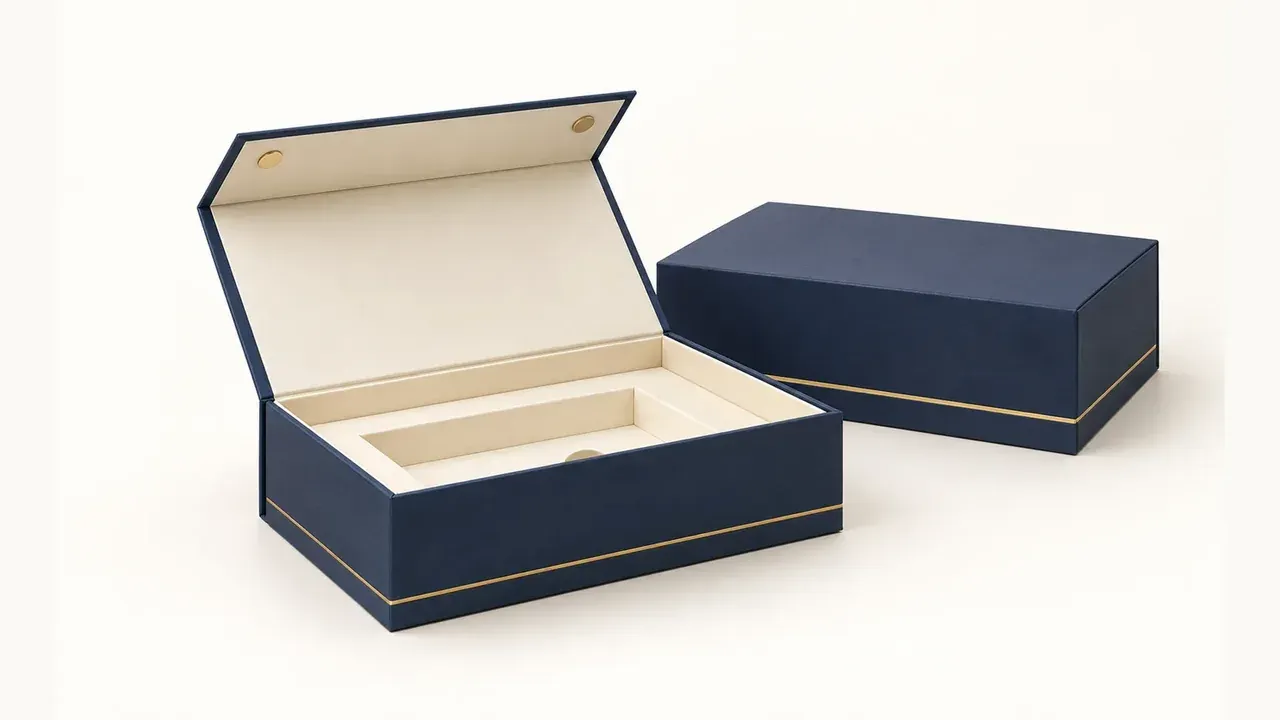
A magnetic gift paper box earns its premium feel when the flap closes cleanly, the front edges meet evenly, and the wrapped board stays smooth through repeated opening. Those results come from structural decisions made before artwork is released. For buyers, the useful question is not simply whether a magnet is included; it is whether the approved sample closes consistently with the intended contents, insert and surface finish.
Define the packed product before choosing the closure
Share the product dimensions, packed weight, insert design and opening experience with the supplier. A deeper insert or a product that sits proud of the tray can change the force needed to close the flap. State whether the box is opened once for presentation, repeatedly in retail, or kept by the customer. The answer helps the factory choose a board construction and magnetic closure arrangement that suit the actual use.
Put magnet locations on the structural drawing
Ask for a dieline or engineering drawing that identifies each magnet position, its polarity, the flap fold, the front-panel edge and the wrapped-board joint. The positions should be referenced from measured edges rather than placed by eye on artwork. This makes the sample review objective: the closure should pull the flap into its intended position without visible offset, excessive snap or a gap along the front.
Review flap reveal and front-edge alignment together
A straight flap edge can still look wrong if the front panel or side walls are not square. Inspect the closed box on a flat surface from the front, side and top. Look for an uneven reveal, a flap that rides high at one corner, a bowed front panel or magnets telegraphing through thin wrap paper. Record acceptable visual alignment on the approved sample, because minor construction changes can be obvious on a dark solid colour or foil-bordered design.
Match board, wrap and finish to the closing action
Rigid board thickness, wrap paper grain, lamination and coatings all affect how a flap behaves at its fold. A high-build finish or heavy foil area near a score can need additional testing for cracking, lift or scuffing. Provide the final print artwork and finish callouts before the pre-production sample is made. Ask the supplier to confirm which surfaces receive adhesive and whether the selected wrap will keep its clean fold after repeated opening.
Test with the real insert and product weight
Do not approve a closure using an empty shell if the final box will have a tray, EVA, paperboard or moulded insert. Pack the intended product or a dimensional equivalent, then close and reopen the sample several times. Check that the product does not push against the flap, the insert stays seated and the magnets engage without requiring the user to force the box. Photograph the closed front edge and both corners as part of the approval record.
Ask quotation questions that protect the approved construction
When comparing quotes, confirm that every supplier prices the same outer size, internal usable size, board specification, magnet count, wrap finish, insert and packing method. A lower quote may reflect a changed board grade, fewer magnets or a different assembly process. Ask for the sample lead time, bulk lead time and what happens if the approved structure needs a tooling or artwork adjustment.
Quotation checklist
• Outer and internal box dimensions, including the product and insert clearance required when closed.
• Board grade, wrap paper, print colours, lamination, foil or other surface finishes.
• Number, size and measured placement of magnets, plus polarity and concealment requirements.
• Dimensioned flap, front-edge and corner-alignment criteria for the pre-production sample.
• Insert material, product-weight equivalent and repeated-opening checks used during approval.
• MOQ, sample timing, bulk timing, carton packing, shipping destination and change-control process.
The practical approval rule
Approve a magnetic gift box only when the filled, finished sample closes evenly and looks consistent from every viewing angle. Attach the signed structural drawing and sample photographs to the purchase order so the quotation, artwork and bulk production all refer to the same closure standard.