
Oct 13, 2026
Magnetic Closure Gift Boxes: Board Grade, Wrap Finish and Assembly Tolerance Guide
Specify magnetic closure gift boxes with the right board grade, wrap finish, flap alignment and delivery plan for a reliable supplier quotation.
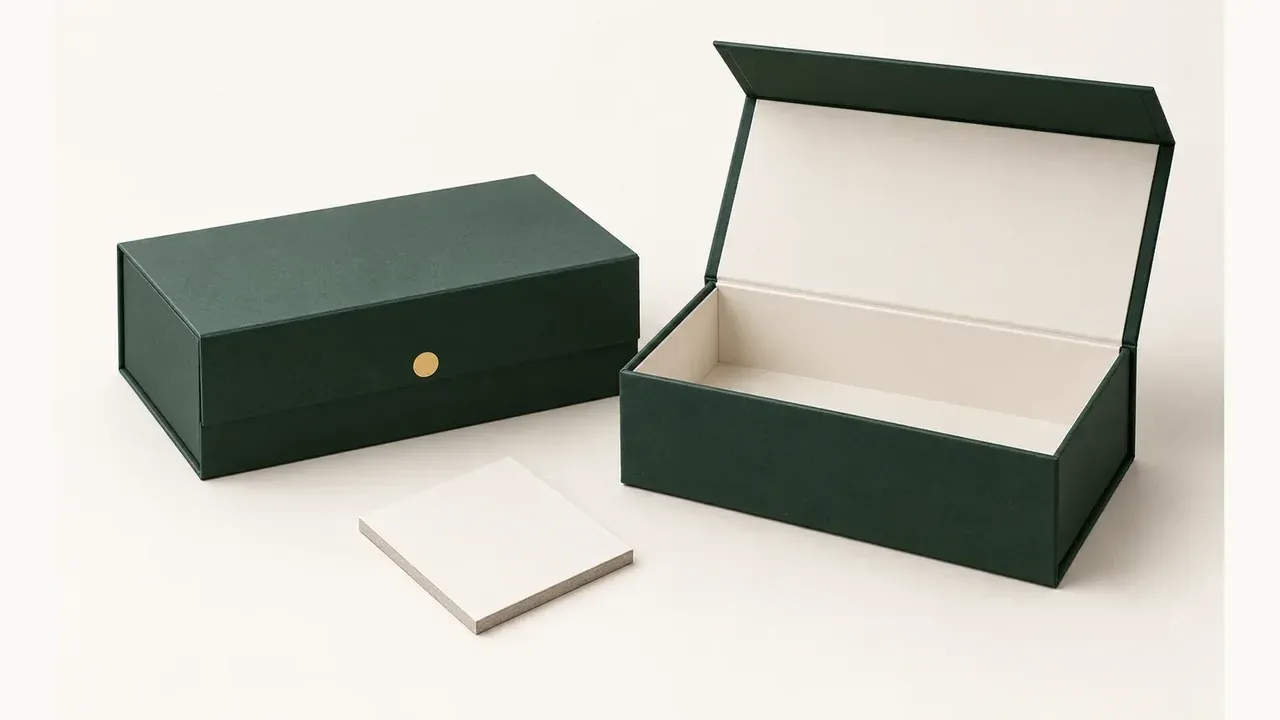
Magnetic closure gift boxes are often judged in one motion: the flap should close cleanly, feel deliberate and line up with the box body. That experience depends on more than a magnet specification. Board grade, wrapped-paper construction, product weight and assembly tolerances all shape the finished result. A clear RFQ helps suppliers quote the right structure instead of treating a premium rigid box as a generic size-and-price request.
Define the use case before choosing the board
Start with the packed product, not the external box dimension. State the product size, weight, fragility, insert requirement and whether the box will be opened repeatedly at retail. These details help determine the board caliper and the need for reinforcement around the hinge and flap.
Ask the supplier to name the proposed board type and thickness in the quotation. If a minimum recycled content, fiber claim or odor requirement matters, list it as a separate requirement and request supporting documentation. A heavier board is not automatically better; it must suit the pack weight, intended handling and target presentation.
Specify the magnetic flap and assembled geometry
Describe the closure configuration: book-style flap, front flap, concealed magnets or another structure. Provide the internal length, width and depth, then identify the acceptable relationship between the flap edge and the box face when closed. A request for a "tight" closure is too subjective for sample approval.
For a high-value launch, ask for an assembled sample with the intended insert and packed product weight. Open and close it repeatedly, check corner alignment and look for stress whitening or lifting at wrapped edges. Agree how the supplier will measure the critical gap, overlap or edge alignment before production begins.
Match wrap paper and surface finish to the handling environment
The wrapped sheet creates the visible surface, so it deserves its own specification. State the paper type, color reference, print method and the requested finish: uncoated, matte lamination, gloss lamination, soft-touch film, embossed texture or foil detail. Include a physical color standard when brand color is important.
Review the surface with real handling in mind. Matte and soft-touch finishes can create a premium feel, but may show finger marks, scuffs or pressure differently from a gloss surface. Request a sample that includes the proposed logo treatment, folds and wrap joins, then inspect it under the lighting where customers will see it.
Build tolerances and inspection points into approval
Rigid boxes are hand-assembled or semi-manually converted in many production flows, so practical tolerances matter. Identify the dimensions and visual points that are critical to your product: internal fit, lid or flap alignment, magnet engagement, corner squareness, wrap seam location and logo position.
Ask the supplier to propose measurable acceptance limits rather than relying on photos alone. The approved sample should become the visual reference, while the quotation or quality plan records the agreed inspection method. If your program needs third-party inspection, share its timing and sampling expectations before the production schedule is locked.
Quote MOQ, sampling and delivery as one plan
MOQ may change with board purchase, wrap-paper printing, foil tooling, magnets and insert complexity. Request prices at the intended order quantity plus a higher repeat-order tier. Separate one-time costs for artwork setup, tooling, samples and special finishes from the recurring unit price.
Build the delivery schedule around artwork approval, material confirmation, sample sign-off, production, assembly, inspection and export packing. Confirm the desired shipped condition—fully assembled, flat-packed where structurally appropriate, or packed with inserts separate—because it affects freight cube and final packing labor.
Quotation checklist
• [ ] Packed product dimensions, weight, fragility and expected opening frequency.
• [ ] Internal and external box dimensions, including any insert specification.
• [ ] Board type, thickness, fiber/recycled-content claims and odor requirements.
• [ ] Closure style, magnet placement and measurable flap-alignment expectation.
• [ ] Wrap-paper grade, color reference, print artwork and logo placement.
• [ ] Surface finish, foil/embossing details and scuff or fingerprint review criteria.
• [ ] Approved assembled sample with the actual product or representative load.
• [ ] Inspection points for fit, squareness, wrap seams, magnets and cosmetic defects.
• [ ] MOQ ladder, one-time tooling/sample costs and repeat-order pricing assumptions.
• [ ] Production, inspection, packing and dispatch milestones.
Send the product dimensions, visual standard and expected delivery window together. With those inputs, a supplier can align the board, wrap finish and closure tolerances to the experience the custom gift box needs to deliver.