
Oct 13, 2026News & Insights
How to Plan Gift Wrapping Paper MOQ and Delivery for Seasonal Orders
A practical sourcing guide for planning gift wrapping paper MOQ, production lead time, printing options and delivery schedule before peak retail seasons. keywords: gift wrapping paper MOQ, gift wrap
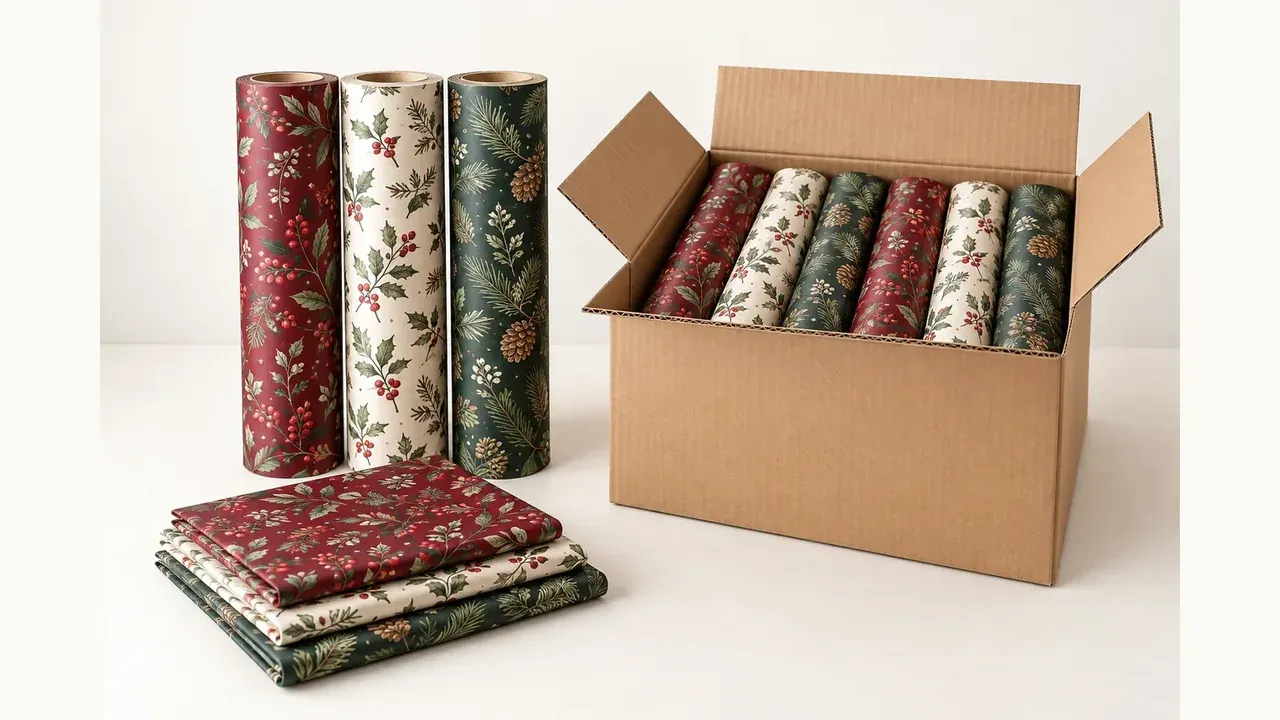
How to Plan Gift Wrapping Paper MOQ and Delivery for Seasonal Orders
Buyers often focus on design first, but most wrapping paper delays happen later when MOQ, print layout and shipping time are not confirmed early enough. For Christmas, birthday, retail promotion and private label programs, gift wrapping paper usually moves on a seasonal calendar. That means the quotation stage should already include order quantity, production timing and packing method.
Why MOQ matters in wrapping paper sourcing
MOQ affects more than unit price. It also affects how many designs can be combined in one order, whether paper can be printed efficiently, and how cartons are packed for export. A small test order may be possible for selected specifications, but custom designs with new cylinders, repeat patterns or special retail packing often need a higher starting quantity.
For buyers comparing suppliers, the useful question is not only "What is your MOQ?" but also "What MOQ applies to this exact paper weight, roll size, sheet size and print design?" That helps avoid a low headline MOQ that does not match the real project.
Which details influence MOQ the most
MOQ usually changes when one or more of these points change:
- roll packing versus sheet packing
- paper weight and base paper type
- design count in one order
- custom label, sticker or shrink-wrap requirement
- carton assortment plan for retail SKUs
If the order includes several artwork versions, buyers should ask whether the supplier can split quantity across designs while keeping one common material and packing format. This is often more practical than asking for many very small custom runs.
How lead time is usually built
Lead time is not only printing time. It usually includes artwork confirmation, paper preparation, printing, slitting or sheet cutting, packing, inspection and export booking. If the order is seasonal, shipping space can also become a bottleneck even after production is complete.
For that reason, buyers should confirm three separate dates:
- artwork approval date
- production completion date
- cargo ready or shipping date
This structure is much clearer than asking for one general lead time figure.
How to reduce delivery risk before peak season
The safest approach is to lock core specifications early. That includes finished size, paper GSM, print color count, surface finish, packing format and destination country. If buyers are still comparing designs, it is often better to freeze the technical specification first and finalize artwork next.
For urgent seasonal orders, ask whether the supplier can:
- use an existing paper stock
- simplify retail packing
- combine designs under one print setup
- split shipment by completion batch
These options can shorten the schedule without changing the main sales plan too much.
What buyers should send for a faster quotation
To quote accurately, a supplier normally needs:
- roll or sheet format
- finished size and paper weight
- estimated quantity per design
- artwork status
- retail packing requirement
- delivery country and target date
When these details are clear, MOQ and delivery discussion becomes much more realistic, and buyers can compare offers on the same basis.
Quotation Checklist
- Product format: roll or sheet
- Finished size and paper GSM
- Number of designs / SKU split
- Printing colors and artwork status
- Packing method: shrink wrap, label, inner pack, carton
- Target quantity per design
- Required delivery country and deadline
- Need for sample, stock paper, or urgent production