
Jul 16, 2026News & Insights
How to Choose the Right Custom Paper Bag for Your Product
A practical factory guide to choosing custom paper bags, including size, paper material, handle style, printing and finishing options.
How to Choose the Right Custom Paper Bag for Your Product
Choosing a paper bag looks simple, but in real production, there are a few details that can make a big difference.
Some bags look nice in pictures but are not strong enough for the product. Some bags use good paper, but the size is not right. Some customers choose a special finish, but later find that a simple printed logo would have been enough.
For custom paper bags, the best choice is not always the most expensive one. It should fit the product, carry well, match the brand style and stay within the budget.
Start With the Product
Before choosing the paper, printing or handle, the first thing we usually ask is: what will the bag carry?
A small jewelry item, a clothing product, a candle, a bakery box and a gift set all need different bags. The size and weight of the product decide many things, including paper thickness, handle type and bag structure.
If the product is light, a standard paper bag may be enough. If the product is heavy, the paper needs to be stronger, and the handle area may need better reinforcement.
It is better to confirm the product size first, then add enough space for easy packing. A bag that is too tight is difficult to use. A bag that is too large may look empty and less professional.
Choose the Right Paper Material
Different paper materials give different feelings.
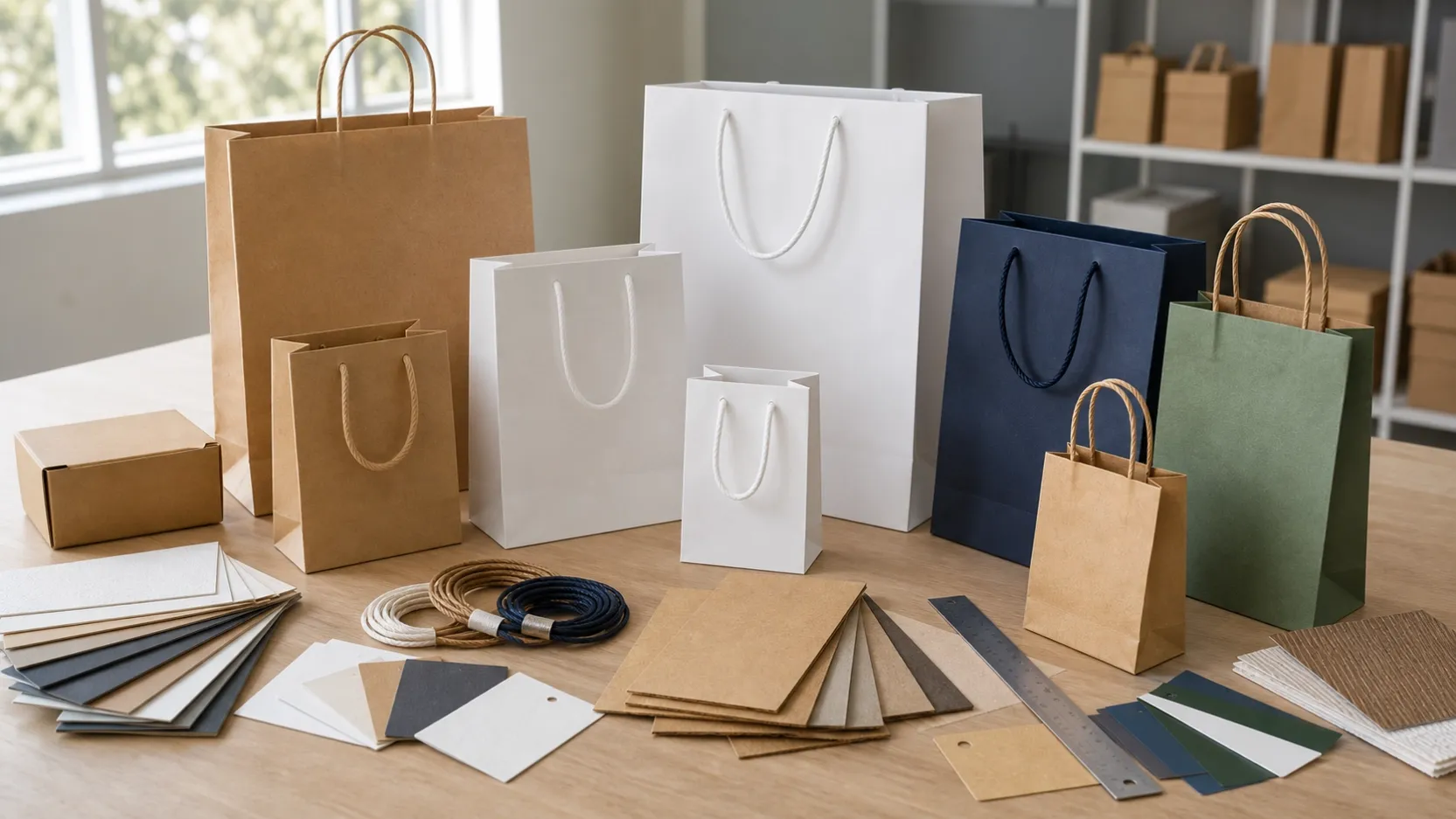
Kraft paper is often used for a natural and simple look. It works well for food packaging, handmade products, gifts and brands that want a more eco-friendly style.
White card paper gives a clean look and is good for simple logo printing. It is often used for fashion, cosmetics, gifts and retail packaging.
Coated paper is suitable when the design has rich colors or full printing. It can make the bag look brighter and more polished.
There is no single best material. The right one depends on the product, design and target customer.
Paper Thickness Matters
Paper thickness should not be chosen only by feeling. It should match the size and weight of the product.
For small and light products, thinner paper may be enough. For larger shopping bags or gift bags, thicker paper is usually better. If the bag is too thin, it may wrinkle easily or feel weak when carried.
For heavier products, the handle area is also important. Sometimes the paper itself is strong enough, but the handle holes or rope area become the weak point. This is something that should be checked before bulk production.
Handle Style Changes the Look
The handle is not only for carrying. It also changes the whole look of the bag.
Twisted paper handles are practical and commonly used for shopping bags. Cotton rope handles look softer and are often used for gift bags or premium packaging. Ribbon handles can make the bag look more decorative. Die-cut handles are simple and useful for some retail bags.
For heavy products, handle strength is more important than appearance. For gift packaging, the handle can be part of the design.
Printing Should Match the Design
For many brands, a clean logo print is enough. It looks clear, saves cost and works well for daily retail use.
If the design has many colors, patterns or full artwork, full-color printing may be needed. But before printing, the artwork should be checked carefully. Logo size, color, position and paper material can all affect the final result.
Sometimes the same color looks different on kraft paper, white paper and coated paper. This is normal because the paper surface is different.
Do You Need Special Finishing?
Special finishing can make paper bags look better, but not every bag needs it.
Matte lamination gives a smooth and calm feeling. Gloss lamination looks brighter. Foil stamping is often used for logos. Embossing, debossing and spot UV can make the design feel more detailed.
For luxury gift bags, these finishes can be useful. For simple retail bags, good paper and clean printing may already be enough.
The choice depends on your brand style and budget.
Samples Are Helpful
If the order is new, making a sample is a good idea.
A sample lets you check the size, paper feel, printing effect, handle style and overall look before bulk production. It is much easier to adjust details at the sample stage than after mass production starts.
For repeat orders, if the size and material are already confirmed, production can usually be faster.
Final Thoughts
A good custom paper bag should be practical first. It should fit the product, carry safely and look suitable for the brand.
When planning a paper bag order, it helps to prepare the product size, product weight, quantity, logo file and any sample pictures you like. With these details, the factory can suggest a better material, size and handle option.
Custom packaging does not need to be complicated. The most important thing is to make the right bag for the product.