
Oct 13, 2026
Gift Wrapping Paper: Roll Diameter, Carton Cube and Freight Planning Guide
Plan gift wrapping paper rolls with clear diameter, carton cube, pallet and delivery details so supplier quotations reflect the real freight cost.
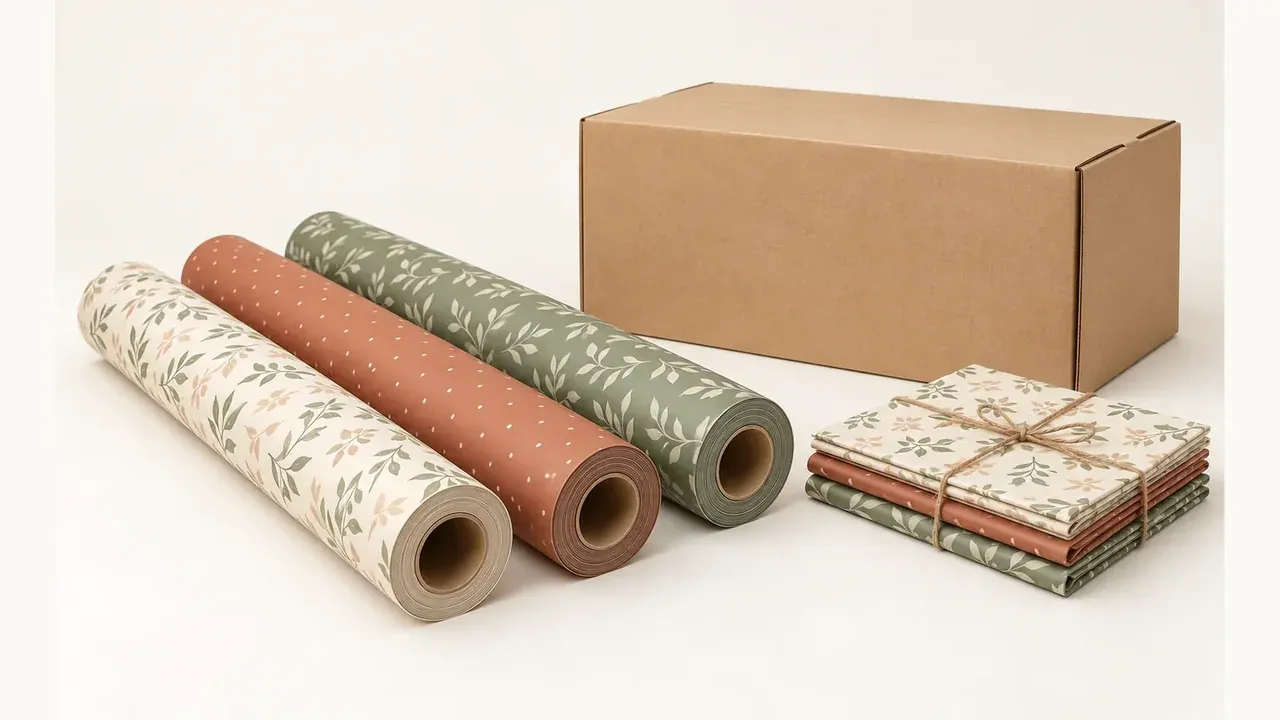
For custom gift wrapping paper, the quoted price per roll is only part of the buying decision. Roll diameter, core size, protective packing and carton cube can change the delivered cost, warehouse handling and retail readiness of the same printed paper. Bringing those details into the RFQ early helps buyers compare like-for-like offers and avoid surprises after production is complete.
Start with the finished roll specification
State the usable paper width, target roll length, core inner diameter and paper basis weight. Then ask the supplier to estimate the finished outside roll diameter at the proposed length. Roll diameter is a working production result, not just a design preference: paper caliper, winding tension and core choice all influence it.
If the paper will be used on a dispenser or conversion machine, provide the equipment's maximum roll diameter and core requirement. For retail rolls, state whether each roll needs a belly band, shrink wrap, end label or barcode area. Keep the requested print repeat and usable length distinct so the supplier can plan the actual converting yield.
Turn carton dimensions into a freight comparison
Ask for the internal and external carton dimensions, rolls per carton, net weight and gross weight at each quoted quantity. From those figures, calculate the carton cube and compare it with the shipment method you expect to use. Two offers with the same roll count can occupy very different space if their cores, protective sleeves or carton layout differ.
Request a proposed carton layout or packing photo for new formats. It should show how rolls are protected against edge crushing, telescoping and moisture exposure. Where outer cartons will be stacked, specify the pallet footprint, maximum pallet height and any no-overhang rule required by your warehouse or retailer.
Balance paper protection with practical unpacking
Wrapping paper edges can be damaged long before a customer sees the print. Define whether rolls need end caps, inner sleeves, polybags, kraft wrap or dividers, and ask the supplier to explain the purpose of each layer. The goal is not maximum packaging; it is protection appropriate to the route and handling points.
Consider the unpacking process too. Retail teams may need shelf-ready cartons with a defined inner-pack count, while a contract packer may prefer bulk cartons that reduce handling time. State whether mixed designs can share a carton and how roll-level identification should distinguish them without obscuring the printed surface.
Plan MOQs and delivery around an efficient load
Printing MOQ, converting MOQ and freight-efficient quantity are not always the same. Request a price and packing table for several quantities, including rolls per carton, cartons per pallet, total gross weight and total shipment volume. This makes it easier to see whether a modest quantity increase reduces the delivered cost per roll.
Work backward from the required arrival date. Allow for artwork release, proof approval, printing, drying or curing where applicable, slitting, rewinding, packing, inspection and dispatch. If the order will move by sea, rail or air, confirm the handover point and document deadline early rather than treating freight as an afterthought.
Use samples to check handling, not only print color
Approve the print and paper quality, then test the proposed roll format. Check that the core does not collapse, the leading edge is secure, the roll unwinds smoothly and the protective pack survives normal handling. A short transport trial can be especially useful for heavy rolls or routes with multiple transshipments.
Record the sample's final width, length, outside diameter, core size and packed weight. These values provide a stronger reference for repeat orders than an artwork proof alone.
Quotation checklist
• [ ] Finished roll width, usable length, paper basis weight and print repeat.
• [ ] Core inner diameter, material and target outside roll diameter.
• [ ] Paper grade, coating/finish, color references and print coverage.
• [ ] Roll-level retail requirements, including labels or protective wrap.
• [ ] Rolls per carton, inner and outer carton dimensions, net and gross weight.
• [ ] Carton cube, pallet pattern, maximum height and no-overhang requirements.
• [ ] Edge, moisture and transit-protection materials and carton layout.
• [ ] Quantity ladder showing MOQ, cartons, pallets, weight and volume.
• [ ] Sample checks for unwind, core strength, roll edges and packed condition.
• [ ] Artwork, production, inspection and dispatch dates tied to the arrival target.
Provide the end use, shipping route and warehouse constraints with the artwork request. A supplier can then propose custom gift wrapping paper rolls that are economical to make, practical to ship and ready for the way your team will handle them.