
Oct 20, 2026
Gift Wrapping Paper Print Proof and Surface Finish: A Buyer Approval Guide
Learn how to compare print proofs, paper stock and surface finishes for custom gift wrapping paper before approving MOQ, production and delivery.
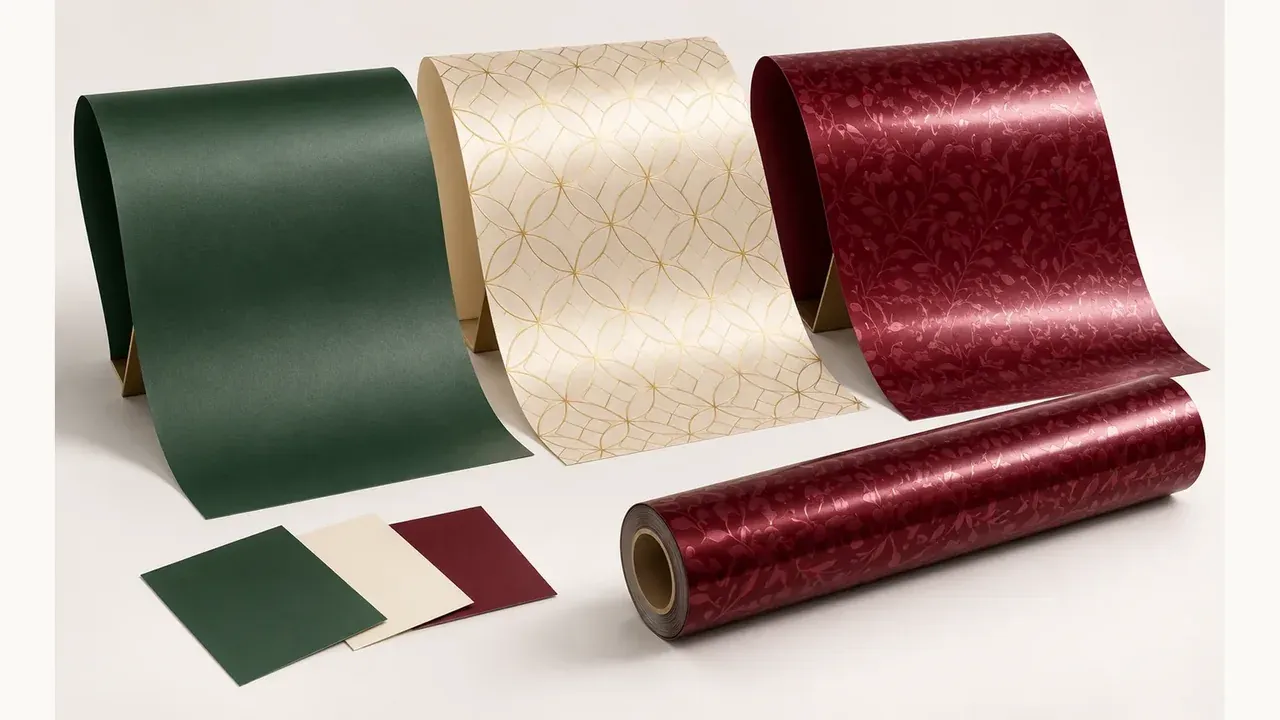
An attractive screen proof is not enough to approve custom gift wrapping paper. The finished sheet or roll depends on the interaction of the artwork, paper stock, ink coverage and surface finish. A buyer who records those choices in one approval process can request a more comparable quotation and reduce avoidable surprises when production starts.
This guide focuses on practical approval questions for private-label and logo-printed wrapping paper. It does not assume that one finish, paper weight or colour tolerance is right for every retail program.
Define the use case and converting format first
State whether the paper will be supplied as sheets, rolls, folded packs or a combination. Include the intended retail or packing use, finished dimensions, repeat direction, artwork orientation and any downstream process such as hand wrapping, automated dispensing or folding. These details influence the useful paper construction and how the print should be viewed.
If the program has matching paper gift bags or gift paper boxes, explain which colours and pattern elements need to align across the set. Treat the set as a visual family, while allowing the supplier to explain where different materials or print processes may create normal variation.
Request a proof that represents the intended substrate
Ask which proof is being supplied: a digital colour proof, a production-like printed sample or a finished wrapping-paper sample. A digital proof is useful for content, placement and repeat review, but it may not show how ink, opacity or sheen will look on the chosen paper.
For the final decision, request a sample made with the proposed paper and, where practical, the proposed print and coating sequence. Mark the approved artwork revision, paper description, finish and sample date. That record is more useful than approving an image attachment without material context.
Compare finish under normal viewing conditions
Matte, satin and glossy surfaces can change perceived colour, contrast and small-detail visibility. Review the sample under the lighting most relevant to the product: a retail fixture, a showroom, daylight or a packing station. Turn the sheet and roll to see glare, fingerprint visibility, rub marks and how the pattern reads across a fold.
Avoid specifying a finish only with a general term such as “premium.” Ask the supplier to identify the paper, coating or lamination system and any limitations it creates for metallic inks, fine lines, large solid areas or subsequent folding. If a finish changes, reopen the appearance approval.
Check repeat, seams and roll direction
For continuous patterns, inspect more than one repeat. Confirm where the repeat begins, which way the design travels through a roll and whether an edge or seam condition is expected. For sheets, confirm whether each cut is meant to show a full motif or whether partial motifs are acceptable at edges.
This is especially important where a logo, seasonal icon or directional pattern must appear upright after wrapping. Give the supplier the intended leading edge and a simple marked artwork file rather than assuming orientation will be inferred.
Record acceptance criteria without inventing a universal number
Use observable criteria for the approval: approved artwork revision, material and finish; pattern orientation; clarity of key details; absence of unwanted marking; and acceptable appearance after normal handling and folding. If a buyer needs a specific test, inspection method or colour standard, provide it before the sample is made.
Do not insert arbitrary rub, opacity or colour-difference values into an RFQ unless they match a relevant internal or market requirement. The supplier can then respond with the applicable process, proposed sample and any constraint rather than agreeing to an undefined performance claim.
Link sample approval to MOQ, schedule and repeat orders
MOQ and delivery depend on the print method, paper availability, finish steps, roll or sheet converting and carton packing. Submit the final artwork and approval criteria together so the quotation identifies what is included in sampling and production. Leave time for a revised proof if a finish or artwork change is made.
For repeat orders, reference the approved master sample and revision record. Require written confirmation before changing the paper, ink system, coating, repeat, roll core, sheet size or packing arrangement. A like-for-like reorder is easier to price and easier to inspect.
Quotation checklist
• [ ] Supply format: sheet, roll, folded pack or mixed program; finished size and intended use
• [ ] Artwork revision, pattern repeat, orientation and logo-placement requirements
• [ ] Proposed paper stock, print method, ink coverage considerations and surface finish
• [ ] Proof type and whether the approval sample uses production-like substrate and finishing
• [ ] Viewing, folding and handling observations for sheen, glare, rub marks and pattern clarity
• [ ] Roll direction, core specification, sheet-cut position and seam or edge expectations
• [ ] Approved master sample, revision control and change-approval process
• [ ] MOQ, sample timing, production schedule, carton packing and delivery destination