
Oct 30, 2026
Gift Wrapping Paper Opacity: How to Approve Show-Through Before Ordering
Compare wrapping paper opacity with real products, printed proofs and folding trials before approving material, logo printing and bulk production.
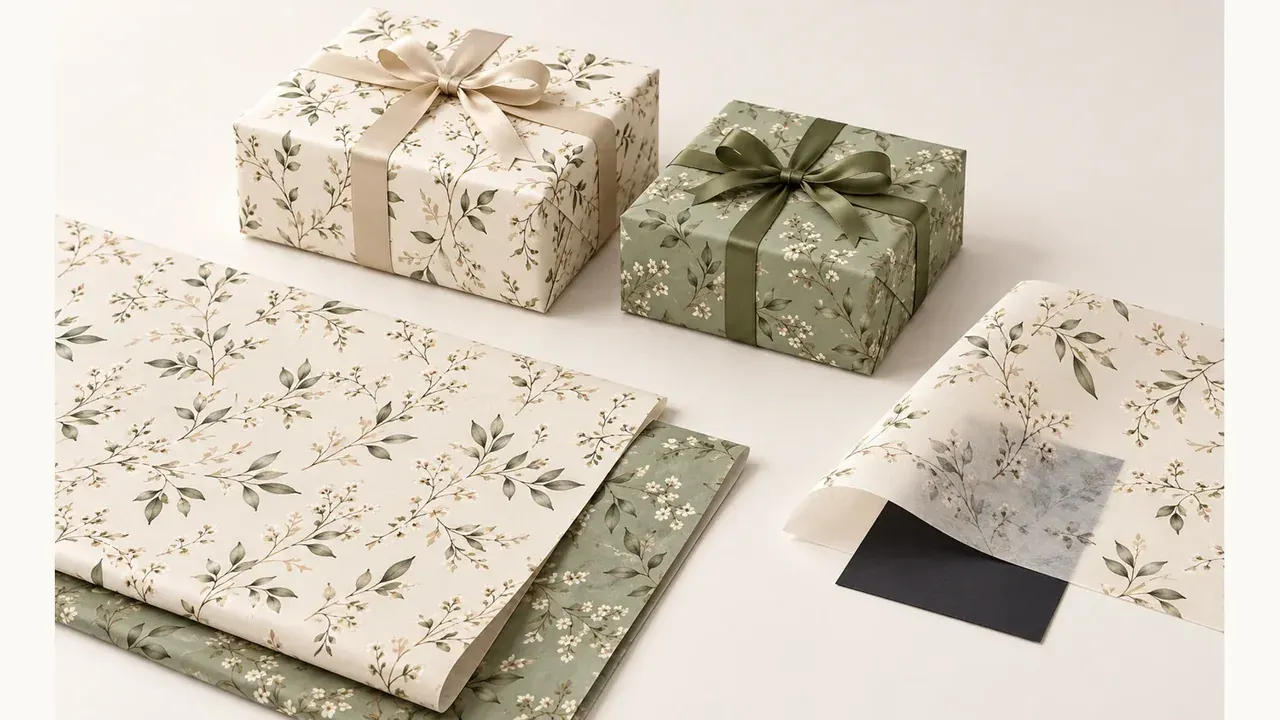
Define what the wrap must conceal
A pale wrap can reveal a dark retail carton or a large logo underneath. Decide whether the paper must hide the contents completely or simply soften their appearance. Send the supplier photographs and dimensions of representative gifts, including the darkest pack in the range. A bright white empty sample table is a poor substitute for the real application.
Compare material samples under the same conditions
Request candidate stocks with their nominal grammage, paper grade and intended printing process. GSM measures mass per area; it does not by itself establish opacity. Compare samples over the same dark card and actual product under the same lighting. If a numerical opacity requirement is needed, agree the test method and acceptance value with the supplier before quoting.
Approve printed sheets as well as blank paper
Ink coverage changes how the sheet looks. A pale repeat can expose more of the underlying pack than a dense pattern. Ask for a production-representative printed sample showing both the lightest area and logo printing. Do not approve concealment from an artwork PDF or a digital screen preview.
Check single layers and folded overlaps
Wrap one representative item using the intended sheet size. Compare single-layer faces, overlapping seams and folded corners. Extra layers may look darker even when the paper itself is consistent. Photograph the agreed seam position and decide whether a visible tonal difference is acceptable for the retail presentation.
Review finish and handling together
Check surface finish, folding feel and scuff appearance after the sample has been wrapped and opened. Ask whether a proposed coating changes print appearance or tape adhesion. Avoid adding a finish solely to solve show-through without testing the finished paper; it may change cost and handling without meeting the concealment requirement.
Separate quotation assumptions from approved specifications
Ask for MOQ by stock, print design and sheet or roll format. Request separate tooling or setup charges where applicable. A heavier stock may alter carton weight and freight, while an alternative stock may require fresh print approval. Obtain the revised quotation against the selected sample rather than comparing prices from different materials.
Keep a signed approval reference for delivery
Retain a dated printed sheet and a wrapped reference gift. Identify the stock, artwork revision, finish and packing format in the purchase order. Agree how production samples will be compared and what happens if the approved material becomes unavailable. Plan sample approval before the delivery schedule is fixed.
Quotation checklist
• Product dimensions and darkest underlying pack
• Required concealment and viewing conditions
• Paper grade and nominal GSM candidates
• Artwork, repeat and logo printing coverage
• Sheet or roll dimensions and finish
• Printed and wrapped sample approval
• Quantity per design, MOQ and setup charges
• Packing, destination and required delivery date
Send a useful inquiry
Send the wrap application, photographs of the underlying gift and artwork together. Ask for stock options and a physical printed trial before bulk approval. For coordinated paper gift bags and gift paper boxes, compare the set side by side, while keeping the opacity requirement specific to the wrapping paper.