
Oct 13, 2026
Gift Wrapping Paper Material and Surface Finish Guide for Private Label Orders
A buyer-focused guide to choosing paper material, finish, roll or sheet format and MOQ points for private label gift wrapping paper orders.
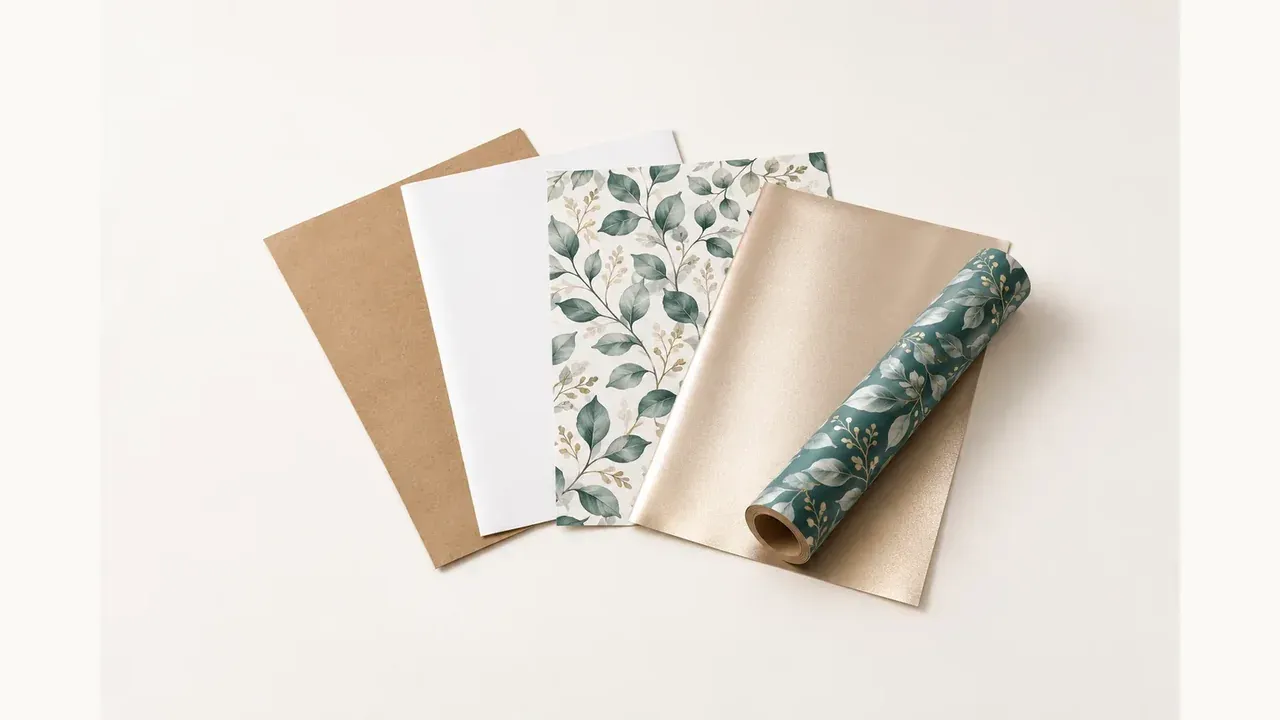
Private label gift wrapping paper projects often begin with artwork, but production decisions are usually driven by material, finish and packing format. A design that looks good on screen may still perform poorly if the paper is too thin, the finish does not match the retail position, or the roll specification does not suit the sales channel.
For importers, retailers and brand buyers, the best inquiry is one that defines not only the print idea but also the paper behavior expected in use. That makes MOQ, sampling and delivery planning much easier to control.
Why material choice matters before artwork is finalized
In wrapping paper sourcing, material affects both appearance and handling. Different paper weights can change opacity, fold quality, stiffness and print feel. If a buyer waits until the sample stage to decide the substrate, the project often repeats color approval and packing checks.
That is why the supplier should know early whether the order is intended for premium gift retail, seasonal supermarket sales, promotional sets or coordinated private label packaging.
Which material points buyers should define first
When requesting a quotation for gift wrapping paper, buyers should clarify:
• paper type, such as coated paper, kraft paper, tissue paper or specialty paper
• target GSM or thickness range
• whether the paper must feel smooth, natural, glossy or more premium in hand
• whether opacity is important for dark gift items or double-sided presentation
• whether the order needs recycled or FSC-related material discussion
These details influence both unit cost and whether the paper matches the expected retail position.
How surface finish changes the final selling impression
Surface finish is often where buyers create differentiation in private label wrapping paper. A standard printed sheet may be enough for volume retail, while a premium seasonal line may need metallic foil, matte finish, gloss coating or specialty texture.
Finish selection should also consider packing and transport. Some finishes look strong on display but scratch more easily during folding, roll packing or bulk shipment. Buyers should ask for finish recommendations based on how the product will actually be sold.
Roll, sheet and folded pack decisions affect MOQ
MOQ for wrapping paper depends not only on printing quantity but also on the retail format. A roll program may require core size, roll length and shrink or label packing decisions. A sheet-based order may depend on sheet count per set and retail insert method. Folded packs can involve extra manual work or special packing layout.
Because of that, buyers should state the sales format clearly:
1. retail rolls
2. flat sheets
3. folded packs
4. multi-design assortment sets
The more specific the format, the more accurate the MOQ and lead time discussion becomes.
How to align color approval with material selection
Wrapping paper color can shift depending on the base paper and finish. A metallic or glossy surface may reflect light differently from a natural kraft or matte base. If the brand uses specific seasonal colors or private label graphics, buyers should approve color on the actual material combination instead of approving print files alone.
This is especially important when one packaging program includes paper gift bags, gift paper boxes and wrapping paper under one design family. Consistency comes from approved production references, not only from matching digital artwork.
What helps suppliers quote faster and more accurately
The most useful wrapping paper inquiry usually includes both technical and commercial details. Buyers should send the paper format, size, material direction, print count, finish requirement and estimated quantity by design. It is also helpful to note whether the order is for trial retail launch, annual program, holiday promotion or coordinated packaging with other paper products.
This helps the supplier judge where MOQ is fixed, where it may be flexible and which part of the order is likely to control the delivery timeline.
How to avoid common private label mistakes
Three problems appear often in private label wrapping paper projects:
• artwork is approved before material and finish are confirmed
• the roll or folded pack specification is left vague until late
• quantity is shared as one total number without design-level split
Buyers can reduce these issues by sending a written quotation brief before sampling. That brief should show the intended format, expected feel, finish direction and packing method, not only the design theme.
Quotation Checklist
• Retail format: roll, sheet, folded pack or assorted set
• Sheet size or roll width, length and core requirement
• Paper type and GSM target
• Print colors, Pantone references or artwork status
• Surface finish: matte, gloss, foil, specialty texture or natural kraft look
• Packing method: shrink, band, label, header card or carton spec
• Quantity per design, per SKU and per shipment plan
• Sample requirement and color approval standard
• Delivery country, selling season and target launch date