
Oct 13, 2026
Gift Paper Box Scuff Resistance: How to Approve Printed Finishes
Compare gift paper box finish samples with a clear scuff-resistance brief, packing checks and quotation checklist before approving private label production.
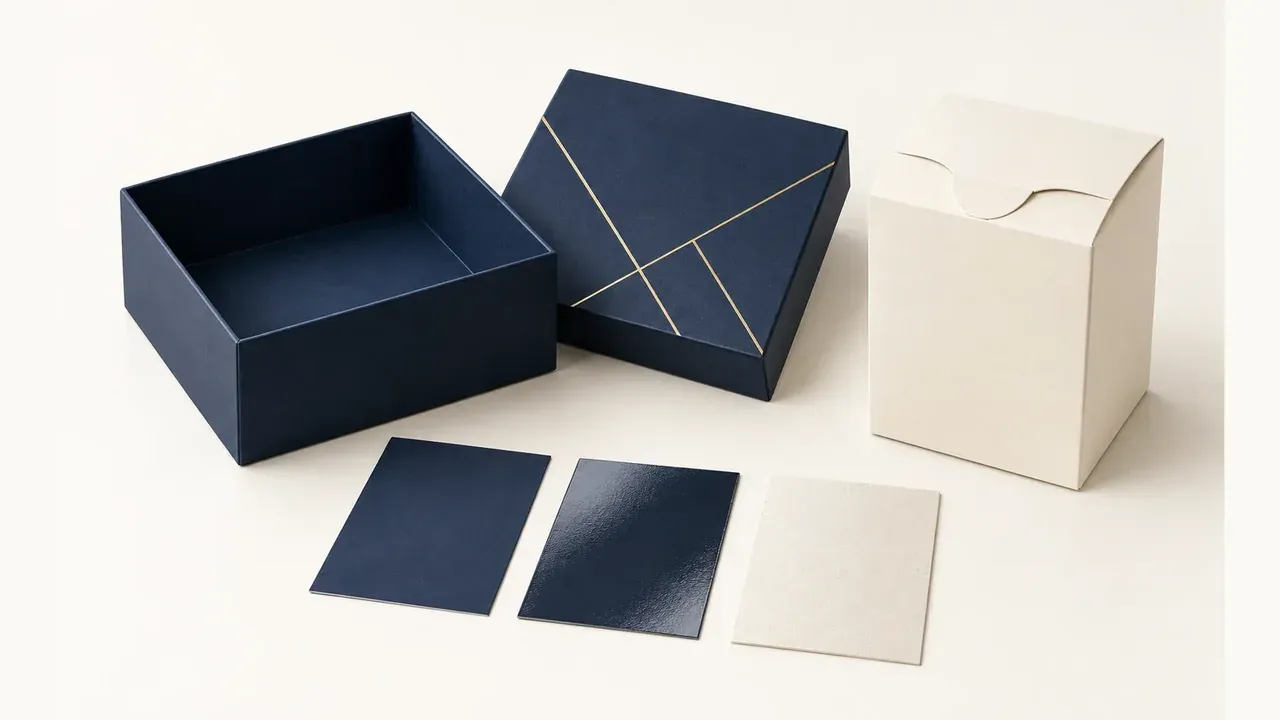
Gift paper boxes are often approved from a clean sample viewed on a desk. The more useful sourcing question is how that printed surface will look after packing, shipping and handling. Buyers can reduce disagreements by defining appearance acceptance and requesting finish comparisons before placing a bulk order.
A finish name such as matte, gloss or soft-touch describes an intended appearance or feel. It does not, on its own, establish how much rubbing a particular printed box will tolerate. Build the approval around the actual material, artwork, finish and packing arrangement.
Map the surfaces that touch the box
List the likely contact points: adjacent boxes, separators, a fitted lid, an outer carton and the customer's paper gift bag. Record whether gift wrapping paper will surround the box or sit inside it. Ask the supplier to reproduce the intended arrangement in the packing sample.
Prioritize areas that are important to the customer, including the lid, front panel and logo. Inspect corners and folds as well, but record abrasion separately from crushing or creasing. They may require different corrective actions.
Compare finishes on the same printed substrate
Request comparative samples using the proposed covering paper or carton board and representative artwork. Include broad areas of the intended color and any foil or spot decoration. A neutral swatch alone may not represent the final design well enough for appearance approval.
Ask suppliers to identify the actual coating or film construction behind each finish option. Request evidence for any anti-scuff claim on the proposed build, and confirm whether the claim applies to the complete printed surface. Do not assume that one finish category always performs better than another.
Keep the comparison practical: approve the option that meets the required appearance and handling criteria at an acceptable total cost. Record whether a finish change affects folding, assembly, decoration or packing.
Define the rub-test conditions and acceptance rule
Instrument suppliers describe rub testing as a way to compare marking and scuffing of inks and coatings on printed packaging. Such a comparison needs controlled conditions to be useful. [Lloyds Laboratory rub resistance tester overview](https://lloydsresearch.com/pdf/RubTesterModel-R202.pdf)
Ask the testing party to specify the method, contact material, load, speed, cycle count and sample conditioning. Have the supplier explain how samples will be prepared and when they will be tested after printing and finishing. Results from different conditions should not be presented as directly equivalent.
Define an appearance rule before seeing the results. For example, require the logo to remain legible and compare visible marking against a mutually approved boundary sample under agreed lighting and viewing conditions. These are proposed purchase criteria, not universal test limits. Where a formal standard is required, have the laboratory confirm its applicability and current method.
Check the assembled box and packed carton
A flat printed test sample is only one part of approval. Review a finished box for lid contact, rubbing at assembly points and marks introduced during packing. Open and close it using the expected handling pattern, then compare it with the approved reference.
Ask for a packed carton sample using the proposed separators and arrangement. Have the supplier recommend transport testing appropriate to the shipment where needed. A laboratory rub result does not, by itself, validate protection against all distribution damage.
If extra protection is proposed, compare its cost, packing labor and carton volume. Confirm that separators or wrapping do not create new contact marks. Do not claim recyclability from a finish name alone; request construction details for any environmental assessment needed by the buyer.
Control logo printing and repeat orders
Store an approved finished sample, an appearance boundary sample where useful, and photographs identifying the reviewed zones. Record artwork revision, substrate, finish, decoration and packing specification together. Photographs support communication but should not replace the physical reference when surface appearance is important.
For repeat private label packaging orders, ask the supplier to flag changes to paper, ink, coating, film or subcontract finishing before production. Determine whether the change requires a new comparison sample. This avoids treating a visually similar substitute as an already approved construction.
Include finish validation in MOQ and delivery planning
Ask for MOQ by finish option and identify any separate trial, tooling or testing charges. Confirm whether the quotation includes protective packing and the production inspection record. A cheaper unit price may exclude the packing arrangement used in the approved sample.
Schedule finish approval before committing to bulk production. Request the sampling, review and rework allowances separately from manufacturing and transport time. Delivery assumptions should identify who approves the physical sample and the deadline for that decision.
Quotation checklist
• [ ] Box structure, dimensions and quantities by size and artwork.
• [ ] Board or covering-paper specification and intended print coverage.
• [ ] Logo printing, foil or spot decoration, and proposed finish options.
• [ ] Comparative samples produced on representative materials and artwork.
• [ ] Rub-test method, conditions, sample preparation and reporting format.
• [ ] Agreed appearance reference, reviewed zones and rejection criteria.
• [ ] Finished-box and packed-carton sample with separators or wrapping.
• [ ] MOQ, trial charges, testing charges and protective-packing cost.
• [ ] Material-change approval process and bulk inspection requirements.
• [ ] Sample approval date, production lead time and delivery basis.
Provide the artwork and intended carton packing arrangement when requesting a quote. Ask for a finish comparison and documented acceptance proposal with the price, so the final decision reflects how the gift paper box needs to arrive and be presented.