
Oct 13, 2026
Gift Paper Box Lid Fit: What to Check Before Bulk Ordering
Check lid fit on two-piece gift paper boxes with a practical sample guide covering dimensions, materials, opening feel, packing, MOQ and delivery approval.
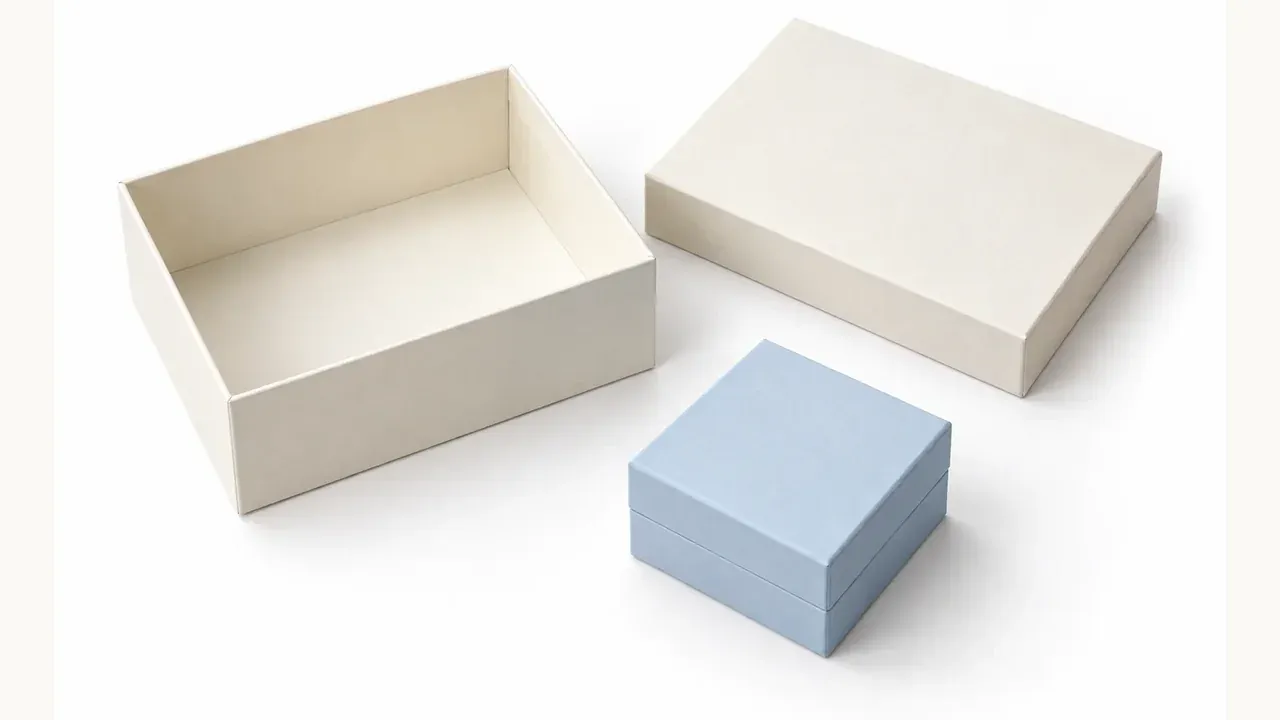
Two gift paper boxes can share the same quoted outer dimensions and still feel different when opened. A lid that is difficult to remove slows packing and frustrates customers. A loose lid may look uneven or move during handling. Buyers ordering two-piece rigid boxes should therefore approve lid fit as a functional requirement, alongside print color and surface finish.
This guide focuses on removable lid-and-base boxes. Drawer boxes, folding cartons and magnetic closures need their own checks. The following workflow is a proposed purchasing checklist; acceptance limits must be agreed for the actual project.
Define the box dimensions that matter
Start with the product, any insert and the intended arrangement. Tell the supplier which dimensions describe usable internal space and which describe the finished exterior. Ask it to label length, width, base height and lid depth on the drawing. An unlabeled set of three numbers leaves room for misunderstanding.
Include the lid overlap you want, whether the base should remain partly visible, and the access needed to lift the lid. If customers must hold the base to open the package, confirm that this is intentional. Do not use a photograph as the only fit specification.
For a gift set, send the real products or agreed dimensional substitutes. Tissue, dividers and other presentation materials should be included in the sample arrangement, because the final packed set is what you need to approve.
Sample the finished material construction
Rigid boxes can use a board structure with an exterior paper wrap; PakFactory describes specialty paper being trimmed and glued around chipboard for its lid boxes. [PakFactory rigid boxes with lids](https://pakfactory.com/custom-rigid-boxes-with-lids.html?options=cart).
Ask your supplier to identify the proposed board thickness, wrap paper, lining and finish. Approve the fit on a finished construction rather than treating an unwrapped structural mockup as the final acceptance sample. Keep the material specification with the approved drawing so a later substitution triggers review.
A white sample can answer early questions about proportions and product space. A decorated pre-production sample should answer the final questions about opening, appearance and contact between finished surfaces. Record which questions each sample is intended to resolve.
Describe opening behavior in observable terms
Replace “luxury fit” with a short demonstration and agreed checks. Place the loaded box on a level surface, hold the base as intended and remove the lid. Check whether it opens smoothly, catches at a corner or requires the user to squeeze the box. Close it again and check whether it sits level.
Repeat using the number of cycles agreed for the project and note any change in behavior or visible marking. If opening force is commercially important, ask the supplier for a measurable method and agreed range. Do not invent a universal clearance or force limit that the factory has not validated.
Never lift a filled removable-lid box by its lid as a handling shortcut. If the brief requires a retained closure for carrying or transit, discuss a suitable closure or additional restraint with the supplier.
Check more than one lid-and-base pair
Request multiple production-representative samples and identify them. Test each original pair and, if lids and bases will be mixed at your packing line, test the interchangeability required by that workflow. Agree in advance whether the supplied units must remain paired or must fit interchangeably.
Look for uneven gaps, tilted lids, corner catching and unwanted contact marks. Photograph findings from consistent angles and record sample IDs. One successful pair establishes a reference but does not demonstrate consistency across a bulk order.
Ask the supplier to propose the bulk inspection sample size, measurement points and treatment of failed samples. Agree these items before shipment. Preserve a signed reference sample on each side where practical.
Include storage, packing and delivery in approval
Tell the supplier about expected warehouse conditions and the delivery route. Ask how it recommends conditioning and protecting the finished paper boxes, and record the conditions used during fit checks. If performance after transit is essential, agree a representative packed-shipment assessment rather than relying only on an unpacked desk sample.
Confirm whether boxes travel assembled with lids fitted, how individual units are protected and how they are arranged in cartons. Have the supplier identify any packing change that would require another fit or appearance check.
Ask for MOQ by size and design, itemized sample and tooling charges, and production timing after final approval. Leave a specific decision point for lid-fit corrections. The purchase order should distinguish production completion from arrival at the required destination.
Quotation checklist
• Product dimensions, weight, insert and complete packed arrangement.
• Internal and external box dimensions with a labeled drawing.
• Lid depth, overlap, exposed base and intended opening method.
• Board, wrap paper, lining, logo printing and surface finish.
• Finished sample quantity, sample IDs and reference retention.
• Agreed opening behavior, measurement method and acceptance limits.
• Paired or interchangeable lid-and-base requirement.
• Inspection sampling plan and handling of nonconforming units.
• Protective packing, carton arrangement and storage expectations.
• Quantity per size and design, MOQ, tooling and sample costs.
• Approval deadlines, production completion and required delivery date.
Send these details with the product arrangement when requesting a custom gift paper box quotation. Ask the supplier to identify any unresolved fit assumptions explicitly. That creates a useful basis for sample approval and prevents a visually attractive sample from becoming the only definition of success.