
Oct 29, 2026
Gift Paper Box Lid Depth: A Buyer’s Guide to Fit and Opening
Choose lid depth for two-piece gift paper boxes by checking grip, removal, product access, finish, packing and sample approval before bulk ordering.
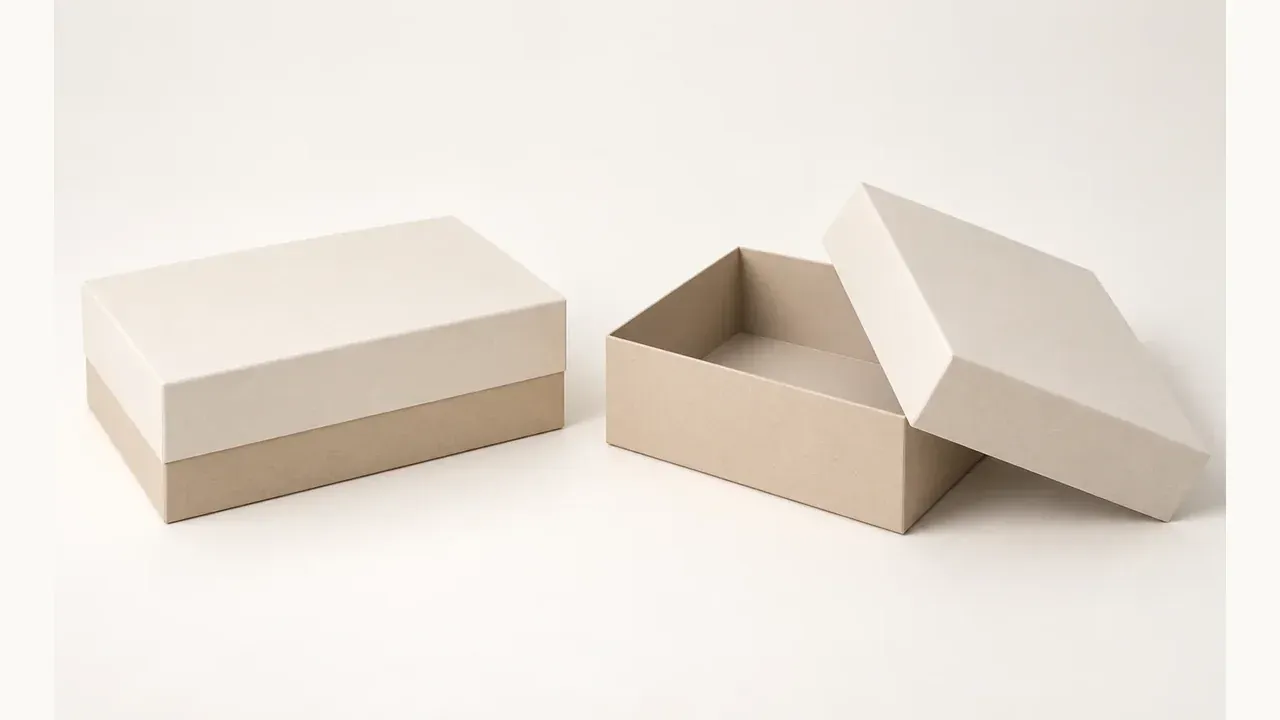
A two-piece gift paper box has a simple structure: a separate lid sits over a base. The depth of that lid changes how much of the base is visible, where a customer can grip the box and how the package opens. For buyers, it is a functional specification as well as a design choice.
Before ordering custom gift boxes, review lid depth alongside the product, insert, wrap paper and surface finish. An attractive empty sample cannot show every issue that appears when the finished gift set is packed.
Define the box dimensions with a section drawing
Request a drawing that identifies the usable internal dimensions, external dimensions, base height and lid depth. State the dimension order and the measurement units. A single description such as “200 × 150 × 80 mm box” leaves too much room for interpretation.
The drawing should show how far the lid overlaps the base when closed and how much base remains exposed. If the design uses a shoulder or another locating feature, identify it explicitly. Ask the supplier to confirm the proposed construction before comparing prices.
Choose lid depth around the way customers grip the box
A shallow lid leaves more of the base accessible, while a deeper lid changes the available grip and the visual proportions. Neither arrangement is automatically suitable for every product. Test the opening action with the box resting on a table and held in the hands, if both are expected uses.
Consider the user’s ability to hold the base while lifting the lid. For a smooth laminated surface, grip may differ from a textured paper wrap. If a finger notch, ribbon lift or another opening aid is proposed, approve its shape and position on a complete sample.
Evaluate fit using the finished materials
Board thickness, wrap paper, adhesive application and surface treatments all contribute to the assembled fit. A structural sample made with substitute materials can help confirm size, but it should not be the final reference for opening behaviour.
Ask for a production-representative sample with the intended wrap and finish. Open and close it several times using a consistent method and record the observations. If a measurable opening-force requirement is needed, agree the equipment, measuring method and acceptance range with the supplier rather than using an undefined instruction such as “premium tight fit.”
Test the box with the product and insert installed
Place the intended product, insert, accessories and any gift wrapping paper in the sample. Check that the lid closes to the agreed position without pressing against the contents. Confirm that tissue folded over the product does not become trapped at the overlap.
After removing the lid, the customer should be able to reach the product without damaging the insert or tipping the box unexpectedly. Review the opening sequence with a person who did not design the packaging. Their handling can reveal access issues that are easy to miss during a design review.
Coordinate logo placement and the visible base band
Mark which surfaces are visible when the box is closed and when it is open. If artwork continues from lid to base, ask the supplier what alignment is achievable and agree an acceptable reference sample. Do not assume a continuous pattern will align identically on every assembled box.
For logo printing, foil or embossing, confirm the distance from folds, edges and corners before releasing artwork. Review the exposed base band as part of the design: it may carry a contrast colour, a pattern or a product identifier that must remain visible at the approved closed position.
Include storage and transport conditions in approval
Tell the supplier where the boxes will be stored and how they will be shipped. Paper-based components can respond to environmental changes, so samples should be assessed under conditions relevant to the supply chain. Where conditioning is required, agree the conditions and duration with the supplier or a qualified testing provider.
Request the proposed carton arrangement and protection between finished boxes. Check whether boxes ship assembled or with lids and bases packed separately. Separate packing can change the work required at fulfilment and should be included in the landed-cost comparison.
Keep MOQ and delivery assumptions visible
Ask suppliers to quote against the same construction, lid depth, material, artwork and packing specification. Confirm whether MOQ applies per size, print design or finish. Identify sample and tooling charges separately, and ask which changes would require a new sample or revised tooling.
Build the schedule around structural approval, artwork approval and final sample approval. Ask for production and transport timing separately. If the launch date is fixed, share the required warehouse arrival date and request a plan that includes approval and transit time.
Quotation checklist
• Product dimensions, weight and presentation requirements.
• Usable internal dimensions and external box dimensions.
• Base height, lid depth, overlap and exposed base band.
• Board specification, wrap paper and surface finish.
• Insert material, product clearance and accessory positions.
• Grip method, opening aids and agreed fit assessment.
• Logo files, artwork revision and alignment reference.
• Complete filled sample using production-representative materials.
• Storage conditions, carton arrangement and assembled or separate packing.
• Quantity per size and design, MOQ, sample costs and tooling costs.
• Approval dates, production completion target and delivery destination.
Use the signed sample and dimension drawing together as the purchase-order reference. A clear lid-depth specification helps the supplier reproduce the intended appearance while preserving practical access to the gift inside.