Oct 13, 2026
Gift Paper Box Insert, Structure and MOQ Guide for Premium Retail Sets
Learn how to plan gift paper box structure, insert style, MOQ and delivery timing for premium retail sets, cosmetics boxes and seasonal gift packaging.
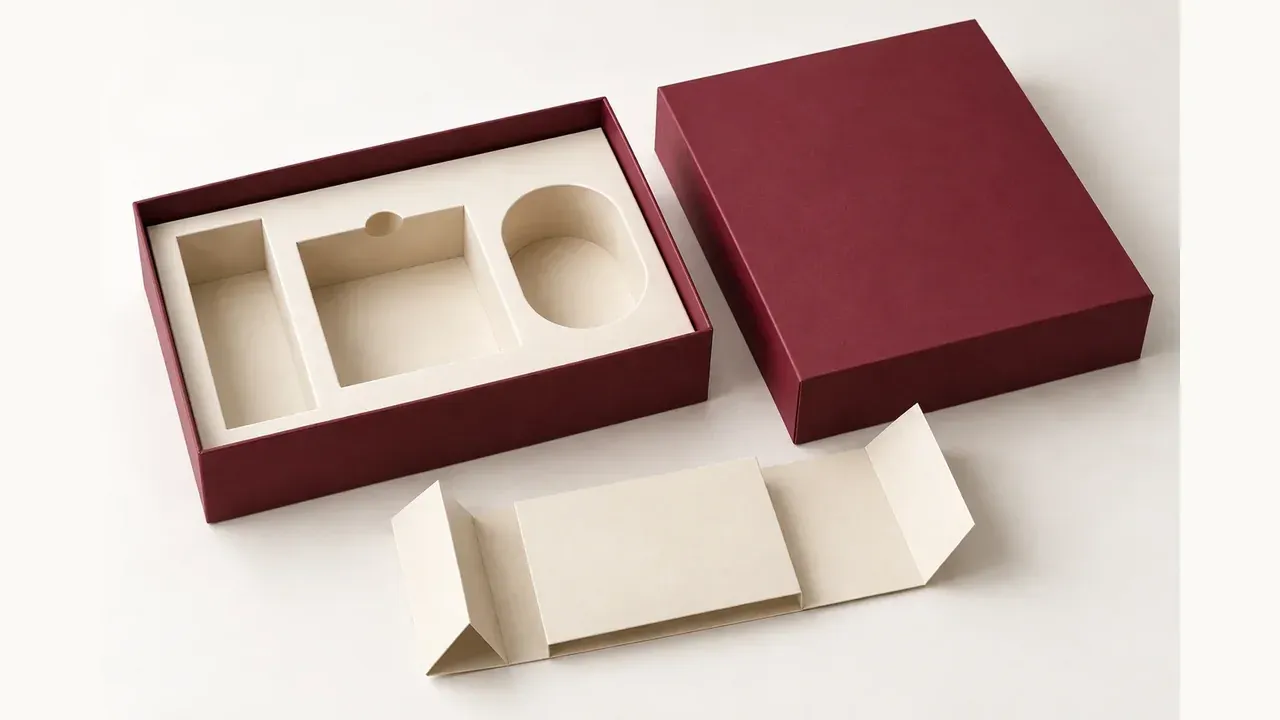
For premium retail sets, the gift paper box is not only a shipping shell. It shapes the unboxing experience, protects the product and determines how efficiently a factory can quote, sample and produce the order. Buyers who ask only for a box size often miss the bigger cost drivers: structure, insert style and finishing route.
That becomes more important when the box is used for cosmetics, holiday gift sets, jewelry or promotional kits. A magnetic rigid box, drawer box or lid-and-base box may all look suitable at first, but they do not create the same material use, labor time or MOQ logic.
Why box structure changes the real quotation
Gift paper box MOQ is usually linked to both handwork intensity and material preparation. A simple folding carton can be more MOQ-friendly than a rigid magnetic box, while a drawer box with custom insert may need more assembly steps and longer sample approval.
For this reason, buyers should name the target structure early instead of sending only reference photos. The supplier needs to know whether the project is a collapsible rigid box, a shoulder box, a lid-and-base box or a mailer-style paper box before confirming a realistic quotation.
How inserts affect cost, protection and sample approval
The insert is often where premium packaging projects become more complex. EVA, paperboard, molded pulp, blister or sponge inserts all protect products differently and influence both unit cost and production lead time.
An insert should be chosen by product weight, fragility and presentation requirement:
• EVA or sponge for premium presentation and stronger positioning
• paperboard insert for a cleaner recyclable structure
• molded pulp when protection and sustainability must both be considered
• blister insert when products need fixed cavities and visible alignment
If the insert is not confirmed early, the outer box may need to be adjusted later, which can slow both sampling and bulk delivery.
Which specifications should stay stable before bulk production
A stronger inquiry keeps the main box specifications consistent before artwork approval starts. Buyers should try to lock these details first:
• box style and opening direction
• assembled size and inner usable size
• greyboard thickness or folding board grade
• insert material and cavity requirement
• logo printing method
• surface finish such as matte lamination, soft-touch film, foil stamping or spot UV
When these points keep changing during sampling, the supplier cannot protect either MOQ efficiency or delivery timing.
How logo printing and surface finish influence MOQ
Custom logo gift boxes often combine printing with foil stamping, embossing or textured paper. These details can lift the shelf value, but they also add make-ready steps and approval checkpoints. A buyer comparing several suppliers should ask which finish is creating the MOQ increase instead of assuming the whole box structure is the reason.
In many projects, one premium finish can be enough. A clean rigid box with one precise logo process often performs better than a box that mixes too many decorative effects with no clear brand purpose.
What usually delays delivery for premium box orders
Delivery delays for gift paper boxes usually happen before mass production begins. Common causes include unfinished die line confirmation, late insert revisions, logo size changes and uncertain carton packing rules.
Before approving the order, buyers should confirm whether the lead time already includes:
• dieline confirmation
• blank sample or white sample
• pre-production printed sample
• insert fit test
• mass production assembly
• export carton packing and booking
This gives a more practical delivery promise than asking only for the factory production days.
When a buyer should use stock structure with custom branding
If the launch calendar is tight, a stock box structure with custom paper wrap or logo printing may be a better opening option than a fully new rigid box format. This is useful for trial orders, seasonal programs and buyers testing a new private label line before moving into a larger MOQ.
Once the first order proves the sales direction, the next run can add a custom insert, upgraded finish or a more distinctive structure without restarting the whole sourcing discussion.
Quotation Checklist
• Box style: magnetic, drawer, lid-and-base, folding or mailer
• Outer size and inner usable size
• Board material, wrap paper and thickness requirement
• Insert material, cavity layout and product weight
• Logo printing method and artwork file status
• Surface finish and color reference
• Quantity per design and total order quantity
• Sample deadline, target shipment date and destination market
• Whether matching paper gift bags or gift wrapping paper are also required