
Oct 14, 2026
Gift Paper Boxes: Edge Wrap, Corner Protection and Transit-Test Guide
A practical guide to specifying edge wrap, corner protection and transit tests for custom gift paper boxes, from samples and MOQ to delivery packing.
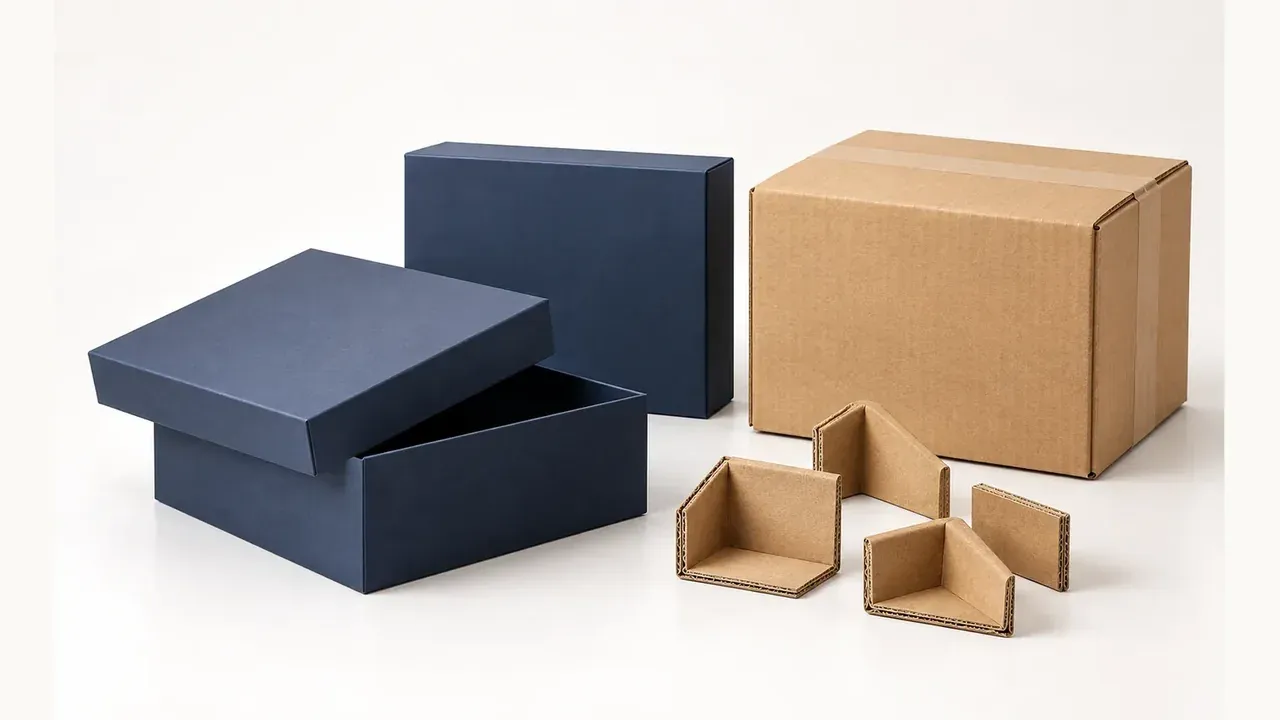
Premium gift paper boxes are judged closely at their corners and wrapped edges. A box may have the correct board grade, logo and finish yet still arrive with rubbed corners, split wrap paper or compression marks from transit. Procurement teams can reduce that risk by connecting the box construction to the outer-carton and pallet plan before approving a production sample.
Map the vulnerable edges of the finished box
Start with the actual structure: lid-and-base, shoulder box, drawer box or rigid magnetic box. Identify exposed corners, wrapped paper joins, lid edges and any raised foil or embossing near an edge. Dark colours and soft-touch finishes can make small rub marks easier to see. If a product insert pushes against a side wall, note that too; internal pressure can show on the exterior after stacking.
Specify the wrap paper and board as one system
Board thickness supports shape, while the outer wrap controls the visible surface. State the board grade or thickness range, wrap paper type, print process and finish together. A supplier should also confirm how the wrap turns around corners, where seams will sit and whether the chosen coating has a higher risk of cracking or whitening on a tight fold. These details are more reliable when reviewed on a production-like sample rather than a material swatch alone.
Select corner protection based on the shipping route
Individual corner guards, dividers, tissue, polybags and fitted outer cartons each solve different problems. A retail-ready box moving by air parcel may need more protection than a palletised carton shipped directly to a warehouse. Avoid adding generic protection without checking fit: loose guards can rub the box, and an oversized master carton allows impact. Ask the supplier to show the box-to-carton arrangement with the proposed protective materials in place.
Use a practical transit-test sample
The goal is to confirm the packed presentation survives the expected route, not to create an abstract pass/fail claim. Define the filled weight, number of units per carton, carton orientation, stacking assumption and handling stages. Inspect after a drop, vibration or compression check appropriate to the logistics plan. Record corner condition, lid fit, wrap adhesion, scuffing and whether inserts still hold the product correctly. Agree in advance which minor marks are acceptable and which are not.
Review master-carton and pallet details
Request internal and external carton dimensions, board specification, gross weight, units per carton and pallet pattern. Include labels, desiccant or moisture barriers where relevant to the route. The best gift box can still be damaged when cartons overhang a pallet or are stacked beyond their safe compression limit. These numbers also help buyers compare freight cube and delivery options accurately.
Align MOQ, sampling and delivery milestones
Protective packing and transit-test preparation may influence the practical MOQ and schedule, especially for a new box size or finish. Separate the artwork approval, structural sample, packed transit sample and bulk-production checkpoints in the quotation. Ask which components have the longest lead time—special paper, foam insert, corner guards or printed carton—and build a contingency into the required delivery date.
Quotation checklist
• [ ] Finished box structure, outside/inside dimensions and packed product weight.
• [ ] Board grade or thickness, wrap paper, print method and finish.
• [ ] Corner locations, wrap seams and any sensitive foil, embossing or dark solid areas.
• [ ] Insert/retention specification and lid-fit acceptance points.
• [ ] Individual protection, carton partitioning and proposed master-carton pack-out.
• [ ] Transit-test method, inspection criteria and approved packed sample.
• [ ] MOQ, sampling milestones, carton data, pallet plan and delivery date.
Next step for buyers
Ask for a production-like gift box packed in its proposed master carton, not just an unprotected display sample. Inspect the box after the agreed transit check and approve the entire packing system before the bulk order starts.