
Oct 21, 2026
Gift Paper Box Drawer Sleeve Fit and Sample Approval Guide
Learn how to specify drawer-box sleeve fit, tray movement, insert clearance and sample approval for custom gift paper boxes before MOQ and delivery decisions.
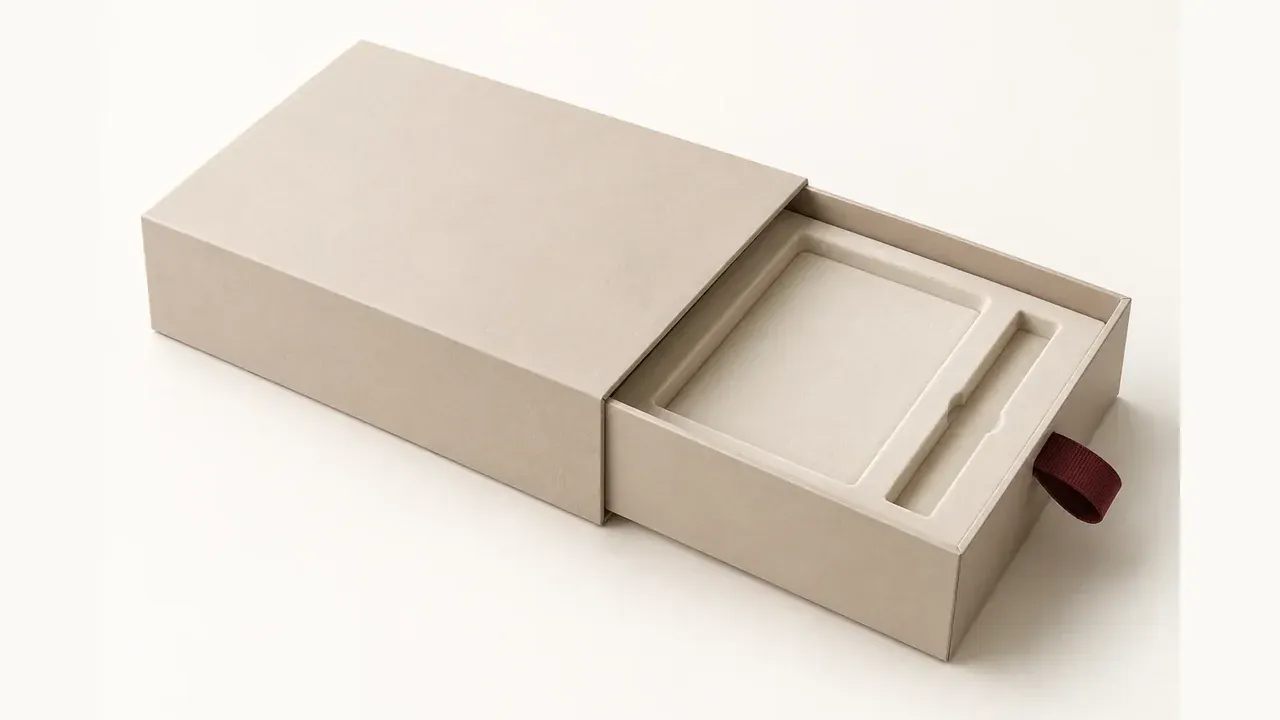
A drawer-style gift paper box is a system of an outer sleeve, an inner tray, a pull feature and often an insert. The unboxing movement is part of the product experience, but it also depends on board construction, wrap paper, dimensional allowances and the actual item placed inside. A buyer who specifies those relationships can ask for a more meaningful sample and avoid approving a box only because it photographs well.
This guide covers practical sourcing questions for rigid drawer boxes used in premium retail, cosmetics, accessories and gift sets. It does not prescribe a universal clearance or material thickness because the right balance depends on the product and construction.
Define the product and opening experience first
Describe the item, insert, protective wrap and any accessories that will ship in the box. Provide the outside dimensions, the preferred orientation and whether a customer should be able to remove the product without turning the tray over. Note whether the drawer will be opened repeatedly in store, once by the end customer or during fulfillment checks.
Also state what the pull feature must do: guide a gentle opening, provide a visible brand accent or remain concealed. A ribbon, die-cut thumb notch or other pull detail needs space and assembly consideration, so it should be approved with the actual structure.
Treat sleeve and tray fit as a coordinated specification
The outer sleeve and inner tray must move together without appearing loose, binding unexpectedly or damaging the wrapped surfaces. Paper thickness, board construction, wrap material, glue areas and changes in humidity can influence that movement. Ask the supplier to explain the proposed construction and any normal variation it expects.
Avoid stating a generic fit number unless the project has a relevant, agreed method for measuring it. Instead, define observable approval conditions: smooth opening with representative contents, no unwanted scuffing, acceptable alignment when closed and a tray that can be removed as intended.
Confirm internal clearance around the actual insert
An insert controls presentation and protects the product, but it changes the tray's available space. Identify its material, shape, placement and whether it is loose, glued or removable. If the product has a lid, cable, cap or delicate surface, make sure the sample reflects those features rather than a simplified placeholder.
Ask to review clearances on all sides and above the product after the tray is inserted into the sleeve. The box can look correct empty while a product or insert creates pressure, rattle or a visible bulge in the finished set.
Specify the wrap, printing and finish in the fit review
Wrapped rigid boxes gain visual quality from paper selection and finishing, but those layers also influence edges, friction and scuff visibility. Identify the proposed wrap paper, colour, print, foil, embossing, lamination or coating in the sample request. A plain white engineering sample may be helpful for shape, but it cannot prove the final appearance or surface behavior.
If the program requires a logo or fine artwork across the sleeve, approve its position from finished reference edges. Changes to the wrap, finish or artwork placement should trigger a new appearance check.
Review a production-like sample under normal handling
Open and close the sample several times with representative contents in place. Check sleeve alignment, tray travel, pull-feature attachment, insert position, wrapped edges and corners. Observe the box in the lighting and handling environment most relevant to the program, such as a retail counter, showroom or fulfillment station.
Record the sample date, artwork revision, material description and the exact product used for the review. If a transit, rub or functional test is required, name the applicable method before sampling; do not assume one informal test proves every performance claim.
Connect approval records to MOQ and delivery
MOQ and delivery depend on board sourcing, die cutting, wrapping, printing, finishing, insert fabrication, hand assembly and carton packing. Ask for the quotation against the approved sample configuration, including the pull detail and insert, so exclusions are visible. For a multi-SKU program, separate common sleeve materials from size-specific trays and inserts.
For reorders, link the purchase order to the approved master sample and require written confirmation before substitutions to board, wrap paper, tray dimensions, sleeve fit, insert or packing. That discipline makes repeated orders easier to compare and less likely to change quietly.
Quotation checklist
• [ ] Product dimensions, orientation, protective wrap and opening experience required
• [ ] Drawer-box outside dimensions, tray configuration, sleeve construction and pull feature
• [ ] Insert material, shape, attachment method and clearance around the actual product
• [ ] Proposed board, wrap paper, print, surface finish and logo-position references
• [ ] Production-like sample with representative contents and agreed observable fit criteria
• [ ] Required inspection, handling or transit method where the project defines one
• [ ] MOQ by size or SKU, sample stage, assembly steps, carton packing and delivery destination
• [ ] Master-sample revision and written change-control process for repeat orders