
Oct 23, 2026
Fold-Flat Gift Paper Boxes: Assembly Time and Landed Cost Guide
Compare fold-flat gift paper boxes by assembly steps, material, logo finish, packed volume and MOQ to build a realistic private label packaging quote.
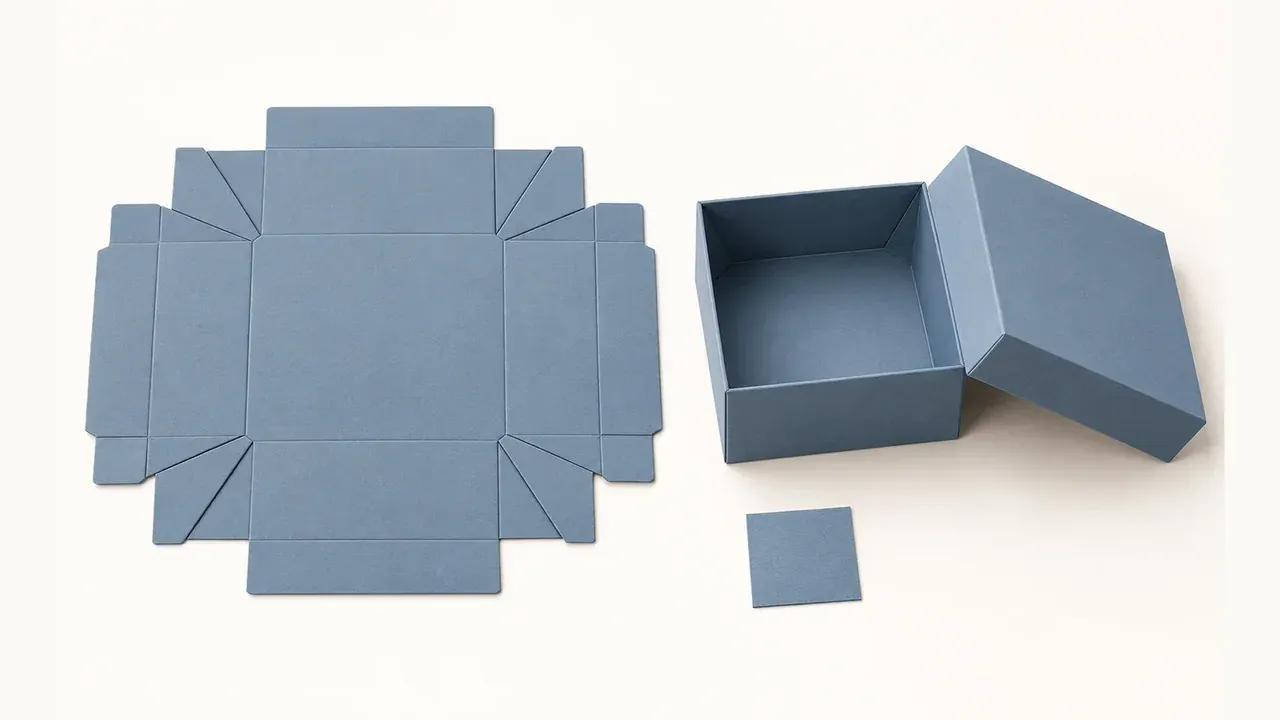
A fold-flat gift paper box can reduce the space occupied before assembly, but a purchasing decision also needs the cost of erecting, checking and filling it. Compare the delivered packaging and the work at the packing station together. The lower factory unit price or smaller shipping carton does not by itself establish the lower cost per usable finished gift set.
This guide covers collapsible rigid gift boxes that arrive flat and are erected before filling. Folding cartons, mailers and fully assembled rigid boxes have different constructions; identify the proposed structure before comparing supplier quotations.
Define the box structure and assembly location
Provide the product dimensions, weight, protective wrap, insert and accessories. Ask the supplier to identify which panels fold, how corners lock or bond, whether release liners must be removed and which components arrive loose. Include a drawing and a short assembly video in the sample request.
State who will erect the box: the factory, a fulfillment partner or store staff. A structure suitable for a dedicated packing line may create delays at a busy retail counter. Confirm whether the erected box is intended to stay assembled; do not assume adhesive corners can be repeatedly flattened and rebuilt.
Define presentation requirements after filling, including lid alignment, corner appearance, closure and product access. An empty demonstration box cannot show every interference created by the actual insert and contents.
Compare material and logo finish on an assembled sample
Request the board construction, wrap stock, visible lining, adhesive method and intended printing or decoration. Board thickness alone does not determine stiffness or assembly performance. Ask the supplier to explain the complete proposed construction.
Evaluate the logo on the finished shape. A mark crossing a fold or wrapping around a corner may change appearance during erection. Check the intended foil, embossing, coating or lamination on a production-like sample and review visible creases, joins and contact points after assembly.
Treat the sample as a record of the agreed construction. Note any substitute material or temporary adhesive so an engineering sample is not mistaken for final production approval. Request a new confirmation where a substitution affects the assembly or appearance decision.
Measure assembly time under the intended working method
Use staff and tools representative of the receiving operation. Start the trial from the proposed delivered condition and include unpacking components, removing liners, erecting the box, fitting the insert and performing the agreed visual check. Define whether filling and closure are included in the timing.
Allow operators to learn the instructions, then record a repeatable trial across several units. Report the method, staffing, quantity, interruptions and rework separately. One expert assembling a single demonstration box is a weak basis for a labor estimate.
Check for missed corner bonds, reversed panels, misplaced inserts and discarded liners left inside. If the method requires pressing or waiting before filling, ask the supplier to specify that step. Agree observable acceptance criteria and keep approved examples for operator training.
Calculate cost per usable assembled box
Build a comparison that includes the purchased box, inserts and loose components; inbound freight and applicable landed charges; assembly labor; and expected handling or rework based on the trial. Use a consistent delivery term and destination for every supplier.
A practical comparison is total attributable cost divided by the number of acceptable assembled boxes. For the labor component, multiply measured labor hours by the relevant loaded hourly cost and divide by accepted output. Keep assumptions visible and avoid counting the same freight or labor charge twice.
Compare alternatives using observed sample results. If a flat version uses less freight space but takes more labor, quantify both differences. Avoid adding an invented rejection percentage or claiming a fixed savings rate before testing and obtaining actual quotations.
Verify carton volume, MOQ and production milestones
Request units per export carton, external carton dimensions and gross weights for the flat-packed proposal. Ask the supplier to include any liners, inserts or separate lids in the shipment calculation. If comparing an assembled alternative, obtain its own packing data rather than extrapolating from an empty sample.
Clarify MOQ per size, artwork, wrap stock and finish, with tooling, setup and sample charges stated separately. Ask whether sharing an outer structure across designs changes the minimum, and have the supplier identify any conditions rather than assuming all designs can be combined.
Schedule structure approval, finished sample approval, artwork release, production, inspection and shipment. Leave time for an assembly trial at the actual destination if that result is needed before production release. Ask for delivery estimates linked to approvals and the agreed shipping method.
Quotation checklist
• Product dimensions, weight, insert and required internal usable space.
• Exact collapsible structure, drawing, loose components and assembly instructions.
• Board construction, wrap paper, lining, adhesive and intended logo finish.
• Assembly location, operators, available tools and whether repeated flattening is required.
• Trial method, included tasks, acceptable assembled appearance and rework recording.
• Unit price, component costs, tooling, samples and MOQ per design and size.
• Flat-packed carton quantity, external dimensions, gross weights and shipment terms.
• Labor assumptions and cost per acceptable assembled box for each alternative.
• Approval milestones, inspection plan, delivery destination and change-control responsibility.
Use this checklist to request a quotation with two clearly defined options where useful: flat delivery with local assembly and supplier assembly before shipment. Review the final decision against accepted sample performance, packing data and the work your team will actually perform.
Material handling reference
Holmen's paperboard handling guidance provides background on protecting material during storage and processing. The finished collapsible box requires its own supplier-approved handling and assembly instructions: https://www.iggesund.com/insights/paperboard-know-how/graphics-handbook/graphics-handbook-publication/handling/