Custom Tote Bags: Non-Woven, Cotton or PP Woven?
Compare non-woven, cotton and PP woven tote bags for logo printing, Christmas programs, MOQ and delivery with a practical sample approval checklist.
Start with the intended load and reuse pattern
Describe what the bag carries, the maximum intended packed weight, and how customers will use it. A lightweight event giveaway and a grocery shopping bag need different constructions. Send a packed product photo and dimensions so the supplier can propose a usable base and handle opening. Specify whether the bag must fold flat for distribution.
Compare three material families
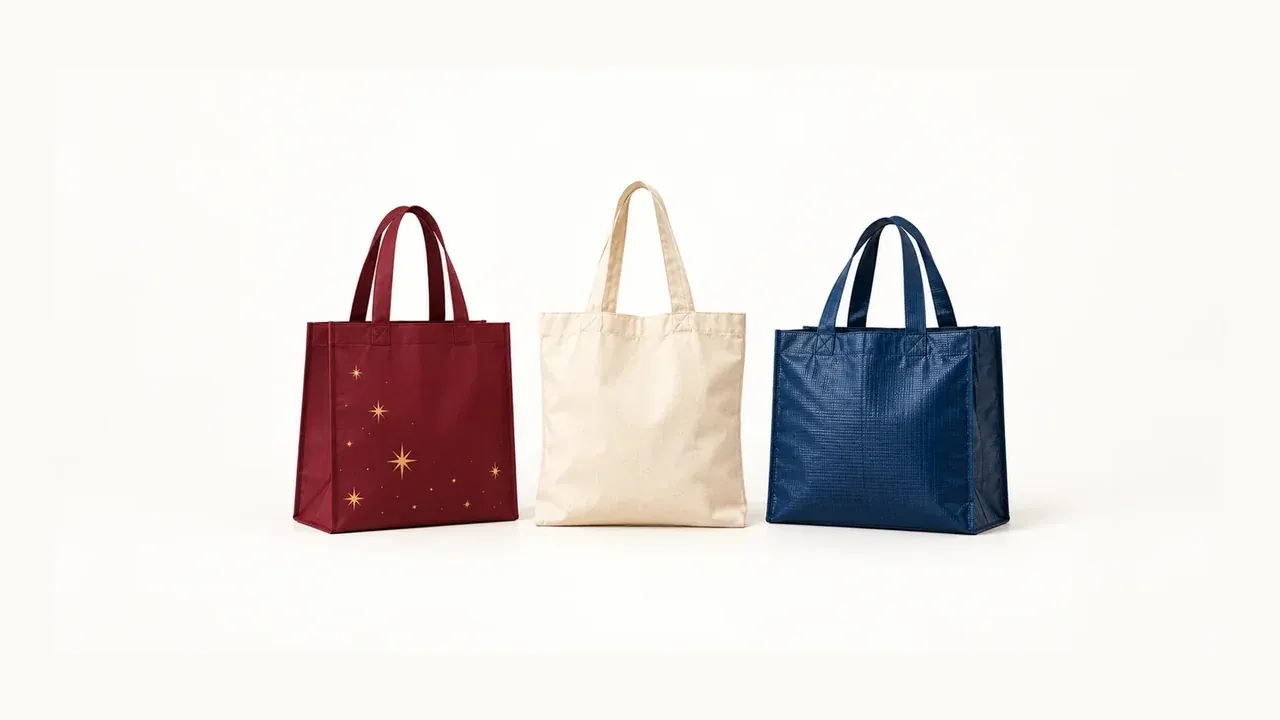
Non-woven bags use a bonded fibre structure; ask the supplier to identify the fibre composition and nominal weight. Cotton bags use woven fabric, with different fabric weights and constructions affecting feel and folding. PP woven bags use woven polypropylene tapes and may have a laminated surface. Request physical swatches instead of selecting from material names alone.
Review seams and handles with a packed sample
Inspect handle attachment, seam allowance, base construction and edge finishing. Agree a loading trial using the intended contents and handling pattern. Material weight alone cannot establish the finished bag capacity. Ask the supplier to record the trial conditions, and do not publish an unsupported load claim.
Match logo printing to the actual surface
Ask which printing method suits the artwork, material and order quantity. Fine lines and small lettering need a physical proof on the proposed bag. Check print placement relative to seams and folds. A laminated PP woven surface, cotton weave and non-woven texture can produce different visual results even with the same artwork.
Plan Christmas bags without creating obsolete stock
For Christmas bags, separate seasonal artwork from reusable brand elements. Confirm the design approval deadline and quantities by colour or motif. A festive print should still leave the handles and main panels functional. Avoid assuming that stock fabric or a standard size means a custom print can ship immediately.
Compare MOQ and delivery on equal terms
Request MOQ by size, material colour and artwork. Separate printing setup, sampling, packing and freight from unit cost. Ask whether a change in material requires another sample and confirm production lead time starts after which approval. Compare cargo-ready dates separately from arrival dates.
Quotation checklist
• Finished width, height and gusset
• Material composition and nominal weight
• Contents and intended load trial
• Handle construction and usable drop
• Artwork, print colours and placement
• Quantity per design and MOQ
• Sample approval and packing
• Destination and required arrival date
Prepare an inquiry that can be priced
Send the supplier your size drawing, intended contents, artwork and quantity split. Ask for a material comparison using the same finished construction. If coordinating with paper gift bags or gift paper boxes, compare physical colours across the set rather than expecting different substrates to look identical.