
Oct 13, 2026
Custom Packaging Pre-Production Proofs for Multi-SKU Gift Programs
Build a reliable pre-production proof process for multi-SKU custom packaging, covering logo color, materials, finish, approvals, MOQ and delivery.
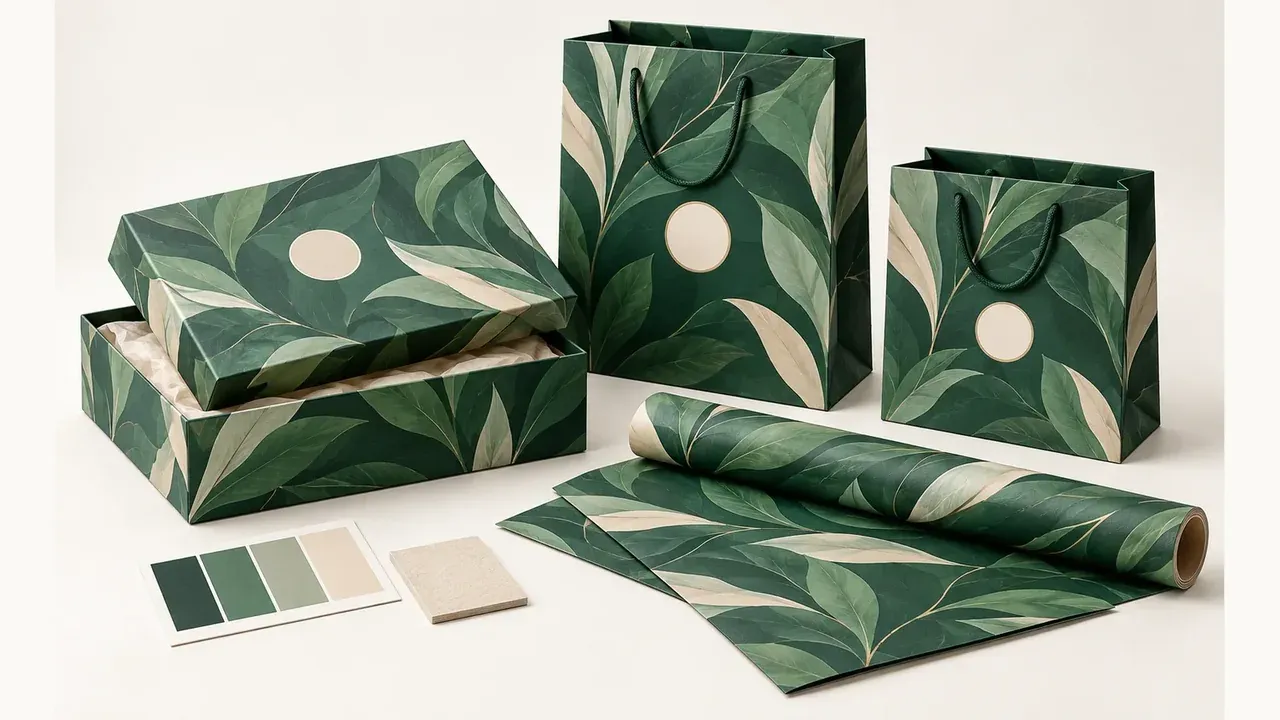
Multi-SKU gift programs often combine paper gift bags, gift paper boxes and wrapping paper under one brand standard. The operational risk is not only a misspelled logo. A shift in ink tone, matte level, board wrap or material texture can make separately produced items look unrelated at launch. A practical pre-production proof process gives buyers a controlled point to approve what will actually be made.
Map the SKU family before requesting proofs
List every item that needs to appear together: bag sizes, box formats, wrapping-paper sheets or rolls, labels, inserts and any seasonal variants. Give each one a stable internal SKU code, finished dimensions, quantity and a short description of its role in the customer experience. This avoids approval feedback being applied to the wrong size or construction.
Group SKUs by shared visual requirements. For example, a logo color may need to match across a bag and a box, while a wrapping paper pattern needs repeat direction and trim rules. Tell the supplier which items must be evaluated side by side so they can plan proofing and production sequencing accordingly.
Separate artwork approval from physical proof approval
An artwork proof confirms copy, logo version, layout and print positions. It does not replace a physical proof for materials, finish or assembly. Record what each approval means and who has authority to release it. A simple approval log prevents an email comment such as “looks good” from being treated as approval of an unreviewed paper or surface finish.
For physical proofs, request the intended substrate and print method whenever brand appearance matters. Include representative folds, seams, foil or embossing, and any glued or assembled features. If a complete sample is impractical for every SKU, identify the item that best represents each material and finish combination, then state exactly what can be carried across the family.
Use a shared color and finish reference
Provide approved vector files and a named color reference. If the brand has an existing physical package, send it as a reference while clarifying which characteristics are critical and which are only illustrative. Paper shade, coating, lamination and lighting can change perceived color, so a matching color code alone may not be enough.
Review adjacent items together. Compare the logo on a coated rigid box, an uncoated paper bag and wrapping paper under the intended retail lighting. Agree a reasonable acceptance range in writing, particularly for large solid areas, metallic ink, foil and soft-touch finishes. Ask the supplier to flag any material combination where an exact match is technically unrealistic.
Freeze change control before the purchase order
After proof approval, create a compact golden-sample record: SKU code, revision date, approved artwork file, material, print process, finish, photo references and approved sample location. This is not bureaucracy for its own sake; it is how a repeat order can be checked against the right version when several stakeholders are involved.
State how changes will be handled. A logo revision, new carton count or replacement material should trigger a written impact note covering cost, MOQ, timing and whether another proof is needed. Keep unapproved substitutions out of the production plan, especially when multiple items are intended to launch together.
Link proof timing to MOQ and delivery milestones
Some materials, print plates, foil dies and special finishes have their own minimums and lead times. Ask for an integrated quotation showing each SKU's MOQ, common-material opportunities, one-time charges and the effect of a late approval. A lower unit price is less useful if it forces a launch to wait for one slow component.
Set an approval deadline ahead of the target dispatch date, then reserve time for material ordering, production, inspection and export packing. Confirm whether all SKUs need to ship together, whether split delivery is acceptable and how cartons will be labeled. The decision should be part of the proof plan, not a last-minute freight choice.
Quotation checklist
• [ ] SKU list with stable codes, dimensions, quantity and product category.
• [ ] Items that must match visually when displayed together.
• [ ] Final vector artwork, logo version, print positions and repeat/trim rules.
• [ ] Separate owners and sign-off points for artwork and physical proofs.
• [ ] Material, print process, coating, lamination, foil and texture requirements.
• [ ] Shared color reference and side-by-side review expectations.
• [ ] Physical proof scope, including which SKU represents each shared construction.
• [ ] Golden-sample record and written change-control process.
• [ ] MOQ tiers, common-material savings, tooling and sample charges.
• [ ] Approval deadline, production schedule, packing labels and delivery plan.
A well-scoped proof process protects both appearance and schedule. It lets a supplier price the full SKU family accurately and gives the buyer one reliable reference for production, inspection and repeat orders.