
Oct 28, 2026
Custom Gift Wrapping Paper Roll Length and Carton Packing Guide
Plan roll length, outer diameter, carton packing and receiving checks for custom gift wrapping paper used in retail, events and e-commerce gift programs.
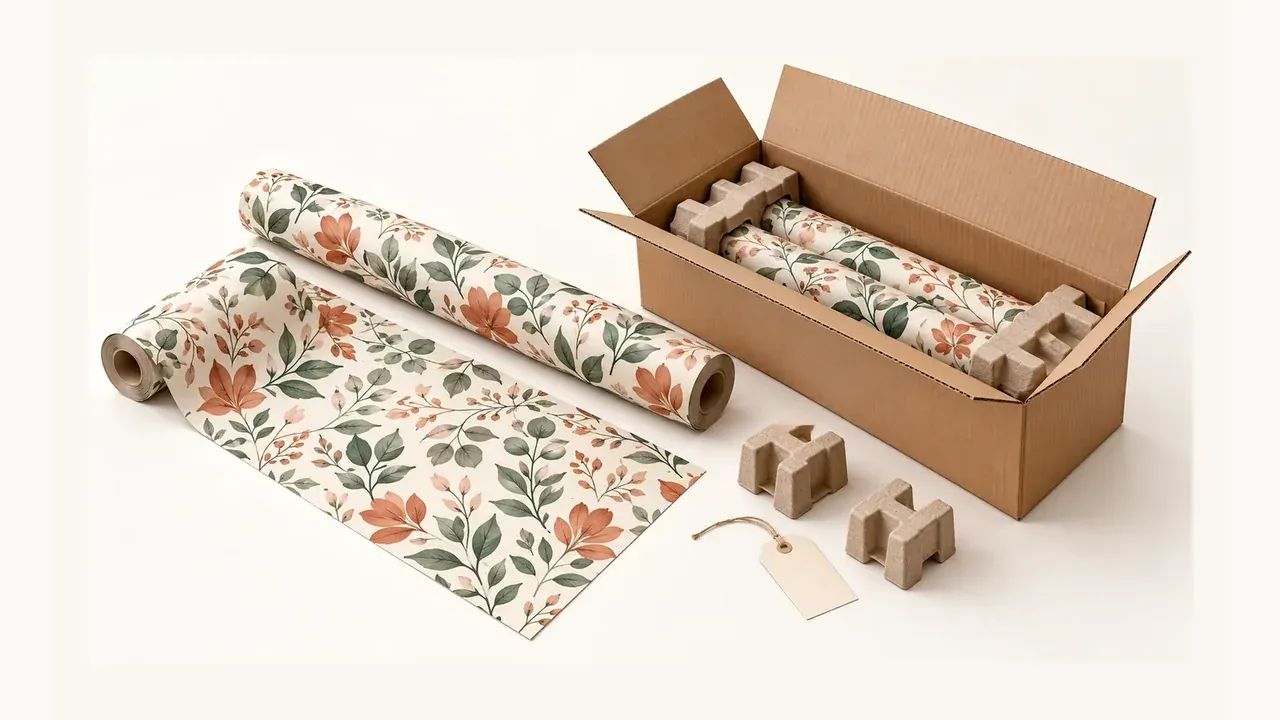
Custom gift wrapping paper is used in retail gift stations, seasonal promotions, subscription boxes and e-commerce fulfilment. The pattern is only one part of the buying decision. Roll length, core format and outer-carton packing determine whether staff can use the paper smoothly and whether the delivered rolls arrive clean, round and ready for the intended program.
Start with the intended use
State where the paper will be used: a counter for hand wrapping, an in-store campaign, a mail-order gift service or a pre-packed retail item. A short roll may suit a limited event or compact workbench, while a longer roll can reduce changeovers for a repeat wrapping operation. Share the dispenser or cutting method if one is already fixed, because its spindle and usable width affect the roll specification.
Define the finished roll rather than only the sheet design
Ask the supplier to quote the paper grade, finished width, repeat direction, core type, roll length and winding direction together. These details influence the outside diameter and the way the artwork appears when a staff member pulls paper from the roll. A purchase order that names only a pattern leaves too much room for inconsistent delivery.
Check pattern scale at the real cut size
Retail gift wrap must look intentional after it is cut around a small box as well as a larger set. Review a printed proof or sample at the typical cut lengths, not only as a flat digital file. For branded seasonal programs, record which motifs should remain visible near the fold and whether a border, logo area or directional illustration needs a specific orientation.
Plan outer-carton protection for transport and storage
Rolls can develop crushed ends, telescoping or surface marks when cartons are loosely packed or stacked without support. Ask how rolls are separated, whether end protection is used, how the carton is sealed and which orientation is marked for storage. These are practical delivery controls for rolls travelling to stores, 3PL facilities or event venues.
Make receiving checks easy for the warehouse
Give the receiving team a short check list: carton count, roll count, outer-carton condition, roll-end condition, print direction and obvious rub or moisture damage. Keep an approved sample or colour reference with the purchase record for private-label programs. Photograph any exceptions before the rolls are unpacked and used.
Align quantities with campaign and replenishment plans
Estimate usage from the planned wrapped-item volume, the average cut length and a sensible allowance for setup and trimming. Keep this estimate separate from the supplier's MOQ: the MOQ is a production condition, while the usage plan describes the buyer's operational need. Ask whether subsequent orders can retain the same paper, print standard, core and packing configuration.
Ask quotation questions before releasing artwork
Compare quotations on an equal basis. Confirm the exact roll dimensions, print colours, material, finish, core, number of rolls per carton, carton dimensions, palletisation if needed, sampling steps and delivery destination. Ask the supplier to flag changes that would alter roll diameter, carton cube or the approved colour appearance before bulk production begins.
Quotation checklist
• Intended use: retail counter, event, e-commerce fulfilment or retail pack.
• Paper grade, finish, printed width, roll length, core format and winding direction.
• Artwork repeat, pattern scale, cut-size proof and colour-reference approval method.
• Rolls per carton, protective separators or end protection, carton dimensions and handling marks.
• Receiving checks for count, roll shape, surface condition and print direction.
• MOQ, sample timing, bulk timing, delivery destination and repeat-order change control.
The practical approval rule
Approve custom gift wrapping paper when the printed sample wraps a typical product cleanly and the proposed carton packing protects the finished roll from factory to final use. Keeping those two checks together helps a buyer avoid a beautiful design that is awkward to handle or damaged on arrival.