
Oct 12, 2026
Custom Gift Wrapping Paper: Ink Coverage, Drying and MOQ Guide
Plan custom gift wrapping paper with the right ink coverage, drying checks, roll specification, MOQ and delivery milestones for a dependable quotation.
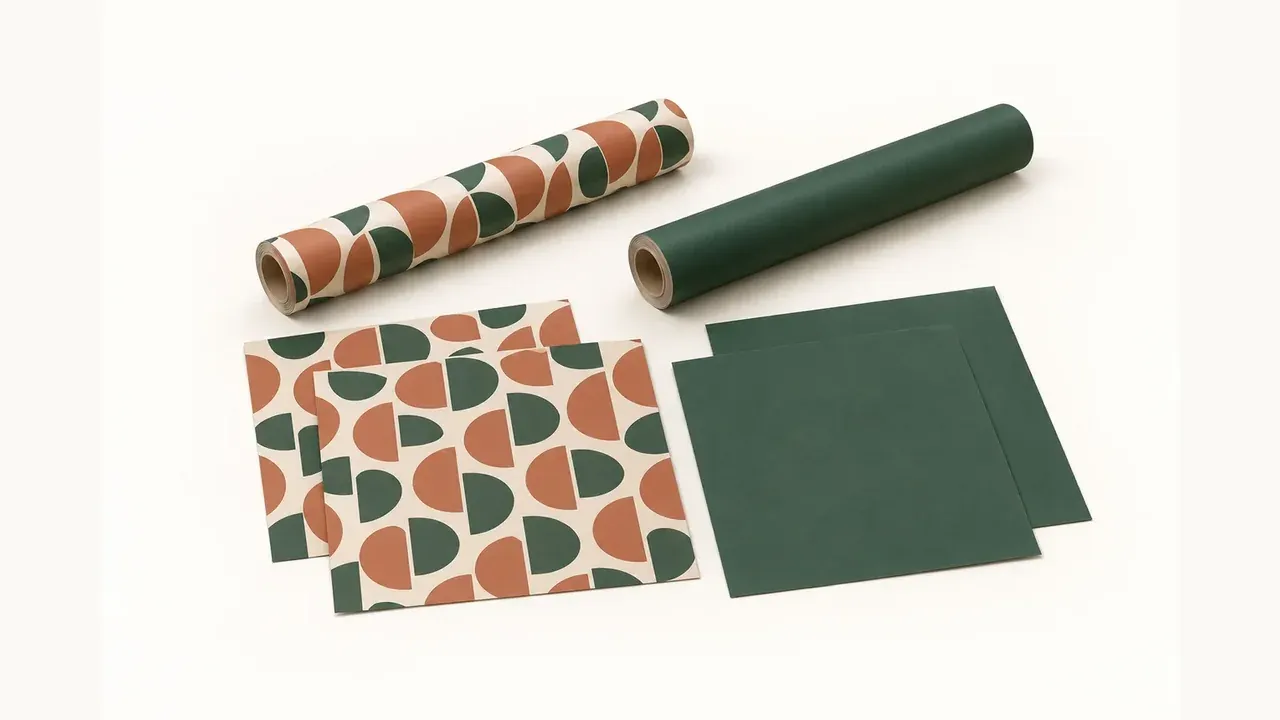
Logo printed wrapping paper looks simple on a screen, but ink coverage changes the production conversation. A light repeat may run differently from a full-bleed dark ground, even when the paper size and total order quantity are the same. Buyers get clearer offers when the artwork, paper, print coverage and packing format are defined together.
Start with the repeat, paper size and print coverage
Send the repeat dimensions, finished sheet or roll width, requested colors and a PDF that identifies any bleed. Ask the supplier to describe the estimated printed area and whether it is treated as spot-color artwork, a large solid field or photographic coverage. This makes quotation comparisons more meaningful than simply requesting a price "per sheet."
Avoid approving color only from a monitor. Request a production-representative proof or press sample on the proposed paper. It should show critical logo areas, fine reverse text and any large solid color blocks.
Choose paper and surface with the intended handling in mind
Paper weight, coating and texture influence how ink sits on the sheet and how the material folds around a gift. State whether the wrapping paper will be hand-folded, machine-cut, bundled, used with tape, or packed into rolls. A smooth coated sheet can present print differently from uncoated paper; neither is automatically the best choice.
Ask what paper is being quoted, including base weight, shade, finish and any grain-direction limitation. If recycled content or a particular certification is required, request the exact claim and supporting documents separately rather than assuming it from a paper description.
Make drying and rub review part of sample approval
Ink that looks correct immediately after printing may behave differently after converting, stacking or shipment. Agree the sample conditioning time before reviewing it. Then fold, tape and stack sheets in the way the customer will handle them. Look at solid areas, high-contact folds and any light logo printed over a dark ground.
Use a clear visual acceptance rule: for example, logos remain legible, no visible transfer appears on a paired reference sheet, and the approved color target remains within the agreed viewing conditions. Where formal testing is needed, ask the laboratory or supplier to identify the applicable current method and report the conditions used.
Quote rolls, sheets and packing as one specification
The same printed paper can ship as flat sheets, counter rolls or retail rolls. Each format changes cutting, core, wrapping and carton requirements. State the usable width, roll length or sheet count, core diameter where applicable, bundle quantity and whether retail labels are needed.
Ask for carton dimensions, gross weight and pieces per carton at the quoted quantity. That information helps buyers compare freight exposure and avoid a low unit price that relies on an unsuitable packing arrangement.
Plan MOQ and delivery around approvals
MOQ can vary by paper, print process, width and converting format. Request a quantity ladder rather than only one price: sample quantity, trial or first production quantity, and repeat-order quantities. Identify artwork charges, cylinder or plate costs when applicable, and whether color matching carries a separate charge.
Build the delivery plan from artwork release through proof approval, printing, drying or curing allowance, converting, packing and dispatch. Confirm who gives final approval, what file revision is approved, and how a change after approval affects the schedule.
Quotation checklist
• [ ] Finished sheet size or roll width, length and core details.
• [ ] Repeat size, bleed, artwork revision and logo color references.
• [ ] Paper base weight, shade, coating or texture, and required claims.
• [ ] Estimated ink coverage and proposed print process.
• [ ] Press proof or production-representative sample for approval.
• [ ] Drying/conditioning time and handling or rub-review conditions.
• [ ] Acceptance criteria for color, legibility, transfer and folding.
• [ ] Packing format, bundle count, carton dimensions and gross weight.
• [ ] MOQ ladder, tooling/artwork charges and repeat-order assumptions.
• [ ] Timeline from artwork release to dispatch, with approval deadlines.
Provide the final repeat file, target use and required packing format when requesting a quotation. A supplier can then match paper, print and converting decisions to the way the custom gift wrapping paper will actually be used.