
Christmas Paper Gift Bags: A Seasonal Assortment Planning Guide
A practical buyer guide to christmas paper gift bags, covering specification, sample approval, MOQ and delivery checks for custom orders.
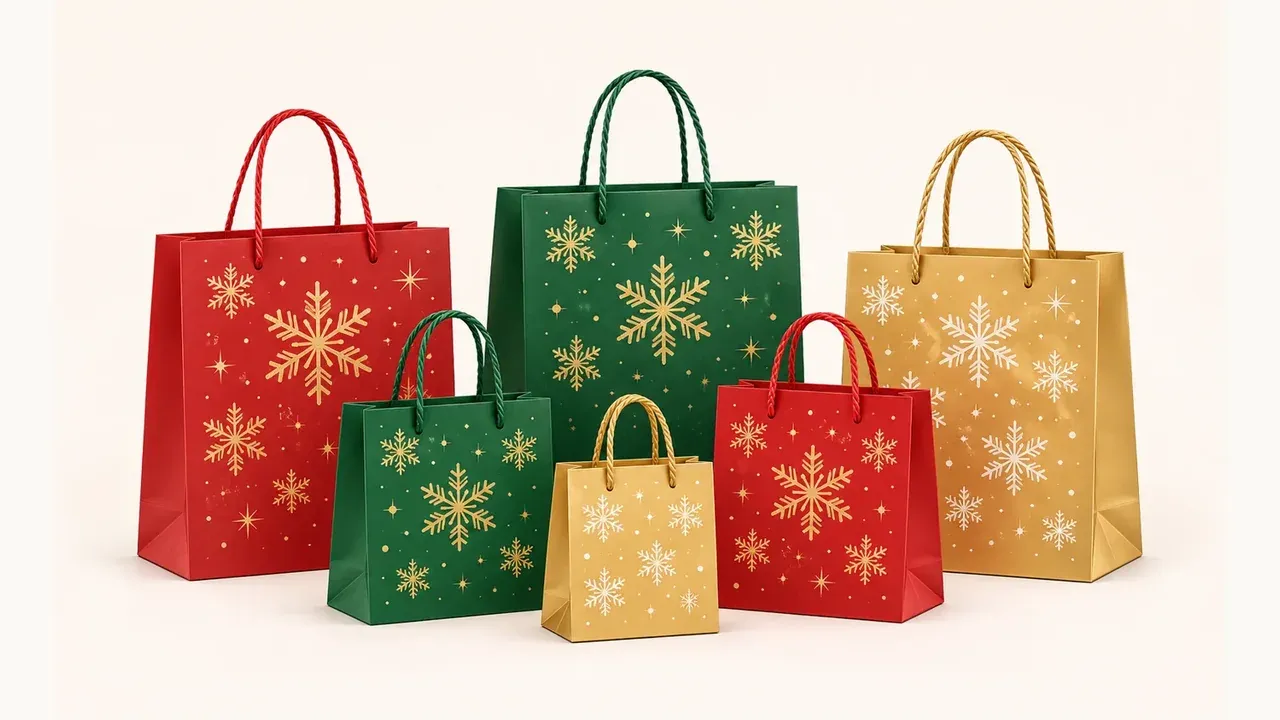
A practical buyer guide to christmas paper gift bags, covering specification, sample approval, MOQ and delivery checks for custom orders.
Choose sizes from the packed gift
Measure gifts after adding their retail box, protective sleeve and tissue. Record width, depth and height in a consistent order. Test the widest box in the proposed bag; a generous height does not compensate for an undersized base. Group products into a small number of useful sizes before dividing your order quantities. This helps prevent slow-moving sizes from consuming the seasonal budget.
Specify paper and reinforcement together
Ask the supplier to identify paper type, basis weight, base board and handle attachment. Paper weight alone cannot establish finished-bag carrying strength. Request an assembled sample and test it with your actual packed gift. Check the bottom, handle holes and folded edges after normal carrying. Record the approved construction so the quotation and production sample refer to the same bag.
Approve Christmas artwork on every size
Use a separate dieline for each size. Keep logos clear of folds, seams and handle holes, and inspect small lettering at actual print size. Metallic foil and dark seasonal colours should be checked on the intended paper because surface texture and folding can change their appearance. Approve an assembled sample rather than relying only on a flat digital proof.
Clarify MOQ for each variation
Ask for minimum quantities by size, artwork and finish. A total order quantity may not satisfy the minimum for every design. Request the price effect of sharing paper colours or handle components across the range. Compare quotations using the same specifications, and identify setup charges, samples and packing costs separately. Confirm how any production quantity variation will be handled.
Plan backwards from the receiving date
State when goods must arrive at your warehouse, then request dated milestones for artwork, sampling, production, inspection and dispatch. Dispatch is a different milestone from delivery. Confirm transport timing for the actual route and agree how sample revisions affect the schedule. If a split shipment is needed, specify which sizes must arrive first.
Make seasonal receiving straightforward
Request carton labels showing design, size and quantity. Check the proposed packing method protects handles, corners and printed faces. Ask for carton dimensions before estimating freight costs. Retain an approved sample and assortment table so receiving teams can check the shipment and future buyers can reorder the same construction.
Quotation Checklist
• Product use, packed dimensions and intended load.
• Finished dimensions, measurement order and tolerances.
• Material, colour, construction and reinforcement.
• Handle dimensions, attachment and surface finish.
• Logo artwork, placement and colour approval reference.
• Quantity by size/design, MOQ and setup charges.
• Sample requirements, acceptance criteria and revision costs.
• Packing quantities, carton measurements and labels.
• Required arrival date, destination and delivery terms.
• Inspection arrangements and reference samples for reorders.
Send this specification with a product photograph or representative packed sample when requesting a quotation. Ask the supplier to list assumptions and alternatives separately so you can compare offers on the same basis.